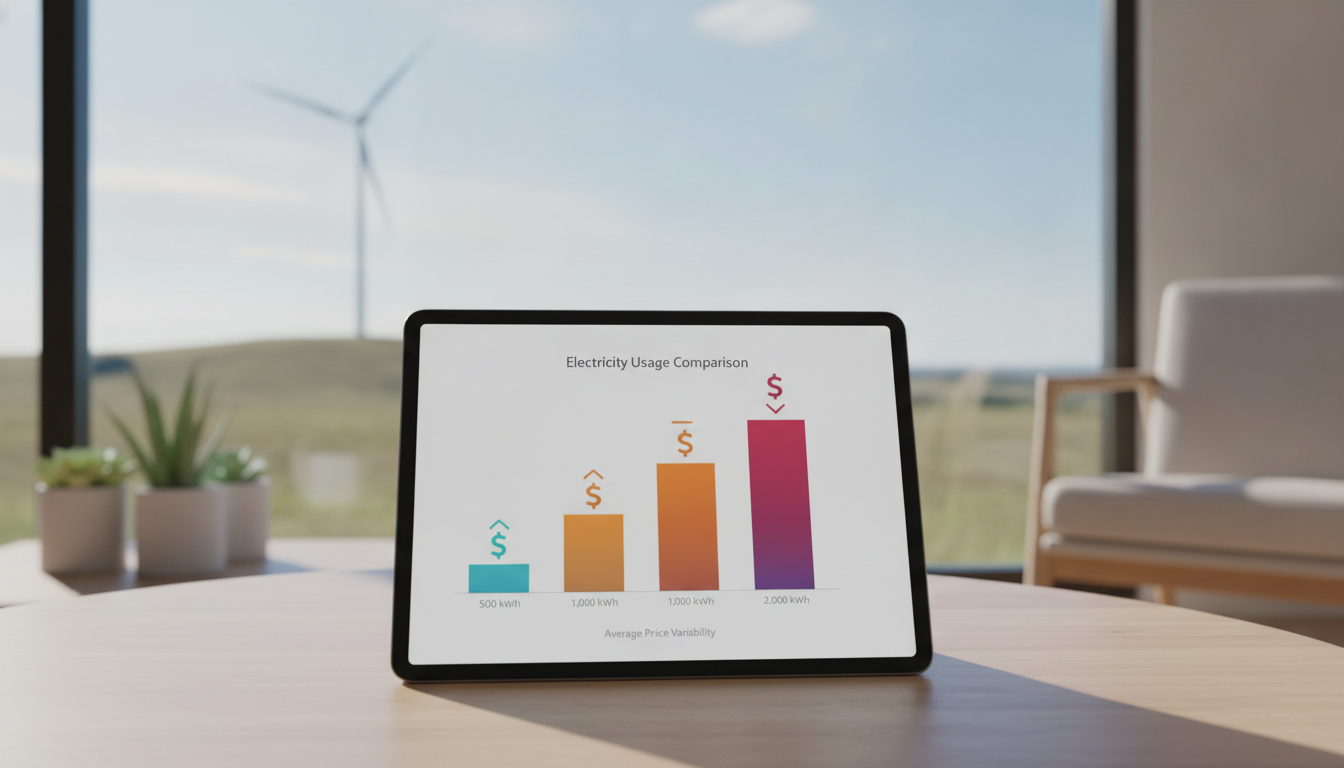

In the vast, open energy market of Texas, you hold a powerful choice. Unlike many other states, Texans have the unique opportunity to select their electricity provider, fostering competition that can lead to significant savings. However, this power comes with a responsibility: to make an informed decision. With a myriad of plans and providers vying for your attention, understanding the nuances of your electricity bill is paramount, especially how your personal energy consumption patterns directly impact the final cost.
The Texas Deregulated Market: Your Power to Choose
Texas pioneered electricity deregulation, empowering millions of residents to choose their Retail Electric Provider (REP). This freedom means you’re not locked into a single utility; instead, you can shop around for the best rates and plans that fit your lifestyle. But with choice comes complexity. Marketing can be dazzling, often highlighting attractive rates that might not tell the whole story for your specific home. This is where BulbOne steps in, serving as an expert guide and independent platform, helping consumers explore their power to choose the best, most cost-effective, and reliable cheap electricity plans in Texas.
Understanding Your kWh Footprint: The Key to Real Savings
Electricity consumption is measured in kilowatt-hours (kWh). Every appliance, light bulb, and electronic device in your home contributes to your total monthly kWh usage. Knowing your average monthly kWh footprint is the single most critical piece of information you need when shopping for an electricity plan. Without it, you’re essentially choosing a plan blindfolded, risking unexpected charges.
The 1,000 kWh and 2,000 kWh Benchmarks: More Than Just Numbers
Retail Electric Providers in Texas are required to display average prices per kWh based on standard usage benchmarks, most commonly 1,000 kWh and 2,000 kWh monthly usage blocks. These figures are crucial for comparison, as they are designed to give consumers a standardized way to evaluate different plans. These displayed rates typically include not only the energy charge but also fixed and variable local charges, such as Transmission and Distribution Utility (TDU) fees. However, it’s vital to remember that these are benchmarks for comparison, and your actual price per kWh will vary based on your exact usage.
The “Effective Rate” Illusion
The concept of an “effective rate” is where many consumers get tripped up. A plan might advertise an incredibly low rate at the 1,000 kWh mark, but what happens if your usage is consistently lower, say 500 kWh, or much higher, around 2,500 kWh? Many plans include fixed monthly charges, minimum usage fees, or tiered pricing structures. For instance, a plan might have a monthly service fee that, when spread across 1,000 kWh, results in the advertised low effective rate. But if you only use 500 kWh, that same fixed fee makes your actual effective price per kWh significantly higher. Conversely, some plans might offer a low rate for the first 1,000 kWh and then jump to a higher rate for every kWh thereafter. Understanding these hidden mechanisms is key to avoiding bill shock.
Decoding the Electricity Facts Label (EFL)
The Electricity Facts Label (EFL) is your best friend when shopping for electricity. This standardized document, mandated by the Public Utility Commission of Texas (PUC), provides a transparent breakdown of a plan’s charges. It clearly outlines the average price per kWh at 500 kWh, 1,000 kWh, and 2,000 kWh usage levels, allowing you to see how the effective rate changes with different consumption patterns. The EFL also details the contract term, cancellation fees, renewable energy content, and whether the plan is fixed or variable. Electricity plans can be fixed, meaning your energy rate is guaranteed for the term of the contract, or variable, meaning the rate is subject to change throughout the contract. BulbOne gathers rates for comparison purposes directly from the EFLs of retail providers, ensuring you have accurate, comprehensive information at your fingertips.
Beyond the Benchmarks: Aligning Your Usage with the Right Plan
To truly optimize your electricity costs, you must look beyond the advertised benchmark rates and understand your home’s unique consumption profile. Reviewing your past electricity bills to determine your average monthly kWh usage over the last year is the most accurate way to predict your future needs. Armed with this information, you can then accurately compare plans by checking the effective rate at your specific usage level on each plan’s EFL. BulbOne simplifies this often-complex process, empowering you to compare Texas electricity rates with confidence. As an independent resource, BulbOne is in no way associated with PowerToChoose.org, the site operated by the PUC of Texas, offering an unbiased and streamlined approach to finding your ideal energy solution.
Don’t let the complexity of the deregulated market intimidate you. By understanding how your average usage patterns dictate your final light bill, and by utilizing resources like BulbOne, you can take complete control over your energy costs. Moving beyond the 1,000 kWh and 2,000 kWh benchmarks to truly understand how a plan aligns with your specific consumption is the ultimate strategy for achieving real savings.
Ready to find the most cost-effective plan for your home? Just call 1-844-567-2863 to speak with our Texas energy experts today.
Frequently Asked Questions About Texas Electricity Rates
Why do electricity rates change based on usage?
Electricity rates often change based on usage due to fixed monthly charges, minimum usage fees, or tiered pricing structures. A plan might have a flat monthly fee that, when divided by higher usage, results in a lower effective price per kWh, but makes the rate higher at lower usage levels.
What is the difference between a fixed-rate and a variable-rate plan?
A fixed-rate plan guarantees your energy rate for the entire contract term, offering predictability. A variable-rate plan’s price per kWh can fluctuate monthly based on market conditions, which can lead to lower or higher bills each month.
How can I find my actual average monthly kWh usage?
The best way to find your actual average monthly kWh usage is to review your past electricity bills for the last 12 months. This will give you a clear picture of your consumption patterns, allowing you to compare plans more accurately against your specific needs.