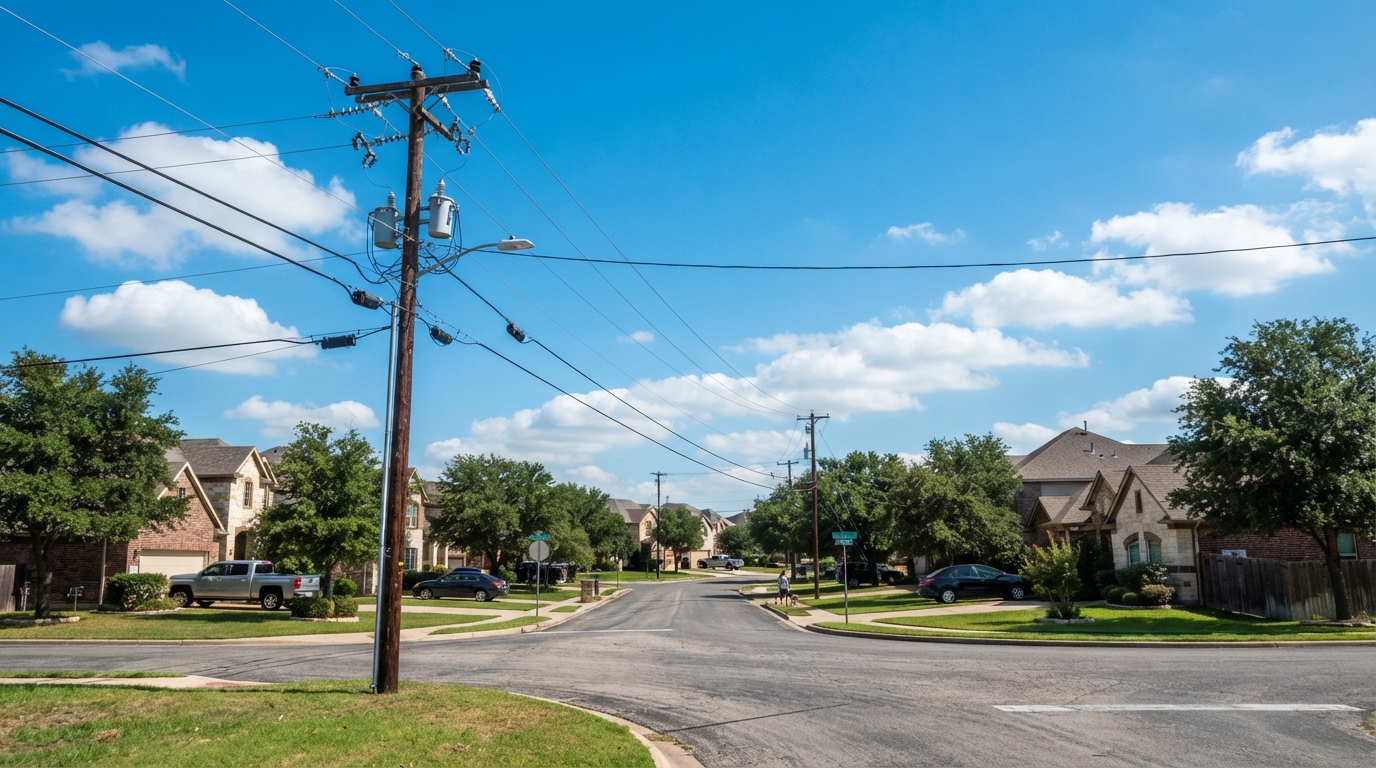

When you move into a new home in the Lone Star State, one of the first things you notice is that your address dictates much more than just your school district or neighborhood association—it dictates your entire power experience. From the bustling streets where you shop for electricity Houston to the sprawling neighborhoods looking for electricity Fort Worth, your physical location plays the ultimate role in determining who keeps your lights on and how much you pay for it.
As an expert guide and independent platform, BulbOne helps consumers explore their power to choose the best, most cost-effective, and reliable cheap electricity plans in Texas. However, navigating these choices requires a solid grasp of how regional infrastructure works beneath the surface.
The Role of the TDSP: Who Delivers Your Power?
To truly understand your electricity bill, you have to look past your retail electricity provider (REP)—the company you pay each month—and look at the entity actually responsible for the physical wires, poles, and meters. These are the Transmission and Distribution Service Providers, commonly known as TDSPs.
Meet the Major Texas Utility Zones
Texas is carved up into several distinct utility delivery zones, each managed by a different TDSP. Some of the most prominent include:
- Oncor Electric Delivery: Serving vast portions of North and Central Texas, including Dallas-Fort Worth.
- CenterPoint Energy: Managing the greater Houston metropolitan area.
- AEP Texas: Powering much of the southern and western regions of the state.
- Texas-New Mexico Power (TNMP): Operating in various pockets across North, West, and Gulf Coast Texas.
Your TDSP is assigned to your geographic location; you cannot choose or change them. When storms knock out power or lines need repair, it is your local TDSP that rolls the trucks, regardless of which retail provider you signed up with.
Why Regional Utility Rates Shape Your Average Price Per kWh
One of the most common points of confusion for Texas consumers is why two identical homes using the exact same amount of energy can have vastly different bills just a few counties apart. The answer lies in local transmission fees.
Pricing is based on each specific area’s utility rates. TDSPs charge delivery fees to maintain the grid, and these costs are factored into your retail plan. When you compare Texas electricity rates, remember that average prices per kWh are typically based on standard 1,000 kWh or 2,000 kWh monthly usage blocks. These usage brackets incorporate both the generation charges from your retail provider and the fixed/variable local delivery charges assessed by your regional utility.
Furthermore, not all cities in Texas have electric choice. While deregulated areas allow you to shop around—whether you are looking for residential options, exploring prepaid electric service, or seeking out small business electricity providers—certain municipal-owned utilities and electric cooperatives remain regulated, meaning consumers in those cities must buy power directly from the local utility.
Shopping Safely: Facts, Disclaimers, and Independent Choice
When you are ready to select a plan, electricity service offers can be structured as either fixed or variable contracts. To make an apples-to-apples comparison, rates are gathered directly from each provider’s Electricity Facts Label (EFL). Keep in mind that these rates are strictly for comparison purposes only, are subject to change, and are only finalized when an agreement is completed.
As you navigate the market, you might also look at tools like the state’s power to choose website. It is worth noting for transparency that BulbOne is an independent resource and is in no way associated with PowerToChoose.org, which is operated by the Public Utility Commission (PUC) of Texas.
Want to check the most competitive rates available in your specific Texas zip code? Just call 1-844-567-2863 to speak with our local energy experts today.
Frequently Asked Questions
### Can I switch my TDSP if I don’t like their service?
No. TDSPs are assigned strictly by your geographic location. While you can choose your retail electricity provider, you cannot change the underlying utility company that delivers power to your poles and meters.
### Why are delivery fees different in every Texas city?
Each TDSP has unique infrastructure maintenance costs, geographic challenges, and population densities across its service territory. These localized operational costs dictate the delivery fees bundled into your overall energy rate.
### Does BulbOne work with the Public Utility Commission of Texas?
No, BulbOne operates as an independent consumer resource. We are completely separate from state agencies like the PUC and the official state-run shopping website, allowing us to provide unbiased guidance.