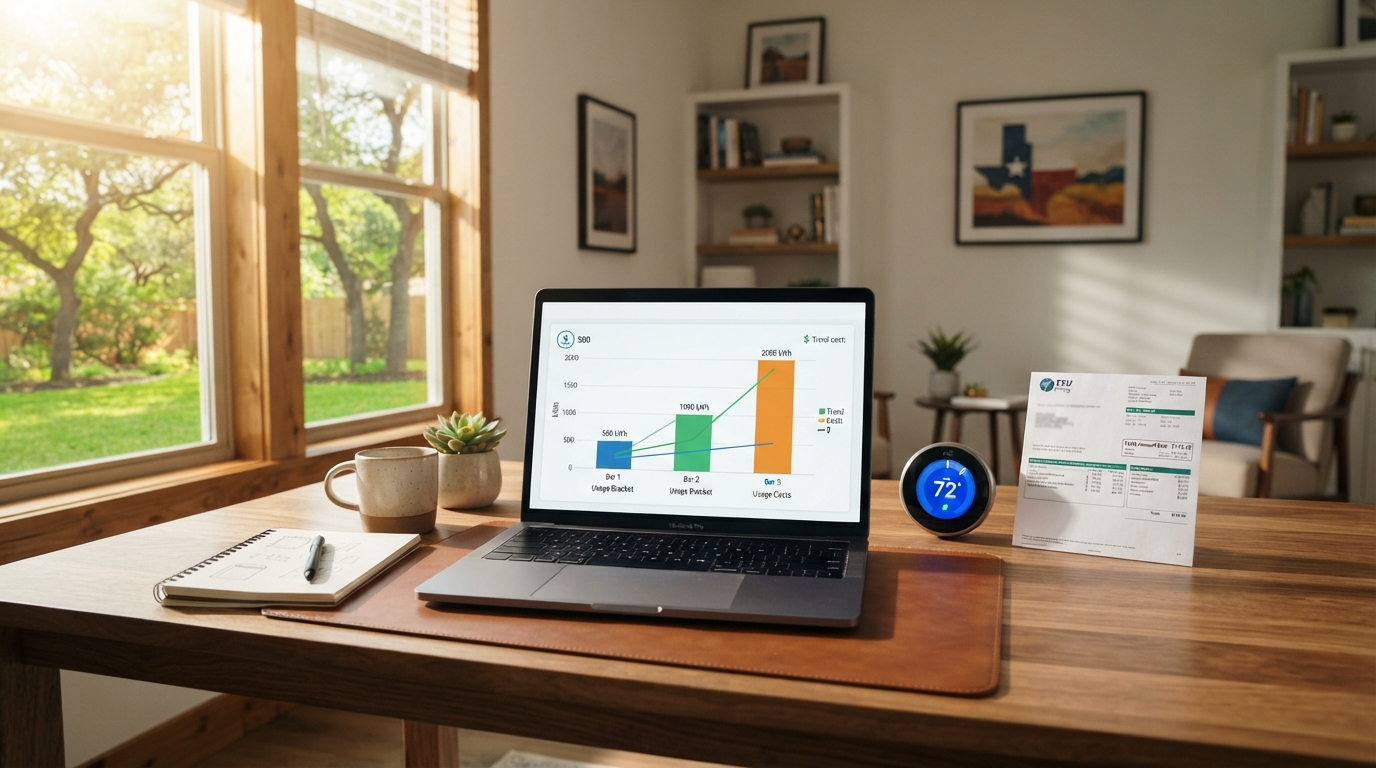
Picture two neighbors living right next door to each other in identical houses. They both use the exact same electricity provider, yet when their monthly power bills arrive, their average price per kilowatt-hour (kWh) looks entirely different. How does this happen? The secret lies not just in whether they chose a fixed-rate or variable-rate plan, but critically, in how their monthly electricity consumption maps to standard utility usage brackets.
Demystifying the Electricity Facts Label (EFL) and Usage Tiers
When shopping for compare Texas electricity rates, navigating the fine print can feel like learning a brand new language. Every retail electric provider in the Lone Star State is required by law to publish an Electricity Facts Label (EFL). This document outlines plan pricing across three standardized monthly benchmarks: 500 kWh, 1,000 kWh, and 2,000 kWh.
The 500 kWh Bracket: Apartment Living and Low Usage
The 500 kWh tier typically reflects the usage profile of a small apartment or a resident who is rarely home. Many energy plans feature base fees or tiered pricing structures that make lower usage brackets disproportionately more expensive per kWh. Whether you are searching for options in electricity Houston markets or seeking residential plans elsewhere, understanding where your home falls on this scale is vital.
The 1,000 kWh Benchmark: The Standard Average Home
For decades, the 1,000 kWh tier has served as the baseline standard for evaluating average Texas electricity costs. This bracket represents a typical mid-sized suburban home. If your monthly usage consistently hovers around this mark, you want a plan designed to optimize value at this specific threshold. For commercial consumers looking at options, specialized small business electricity providers also utilize usage-based structures tailored to enterprise demands.
The 2,000 kWh Scale: Large Homes and Heavy Consumption
Texans living in larger homes, or those running heavy HVAC systems during scorching summer months, often push into the 2,000 kWh bracket. Interestingly, many electricity plans offer credits or lower per-kWh pricing once you cross this higher threshold. However, if your usage drops unexpectedly, you might lose those credits and face a surprisingly high bill. For consumers who prefer strict budgeting without usage tier surprises, exploring prepaid electric service or locking in a predictable contract structure is often the safest bet.
Fixed-Rate vs. Variable-Rate: Structuring Your Contract
Beyond usage brackets, your choice of rate structure dictates how market shifts impact your wallet. While a variable rate may change throughout a contract based on market dynamics, a fixed-rate plan is completely guaranteed for the entire term of the contract. This means your energy charge per kWh will not budge, regardless of weather extremes or market volatility.
As an independent platform, BulbOne helps consumers explore their power to choose the best, most cost-effective, and reliable cheap electricity plans in Texas. Please note that BulbOne is an independent resource and is in no way associated with PowerToChoose.org, the official site operated by the PUC of Texas. Rates displayed on comparison platforms are for informational purposes, include fixed and variable local charges, are subject to change without notice, and are only final when a service agreement is completed.
Want to lock in a guaranteed fixed rate and eliminate energy market surprises? Just call 1-844-567-2863 to speak with our Texas energy experts today.
Frequently Asked Questions
What is the difference between a 1,000 kWh and 2,000 kWh usage tier on an EFL?
An EFL calculates average prices based on how much electricity you consume in a billing cycle. Many plans feature different pricing structures or bill credits that trigger only when you hit specific tiers like 1,000 kWh or 2,000 kWh.
Can my fixed-rate electricity plan change mid-contract because of my usage?
No. A true fixed-rate plan guarantees your energy charge per kWh will remain the same for the duration of your contract term, though your total monthly bill will still fluctuate based on how many kilowatt-hours you consume.
Is BulbOne affiliated with the official state shopping website?
No. BulbOne is an independent consumer resource designed to help you easily navigate the deregulated market, giving you a transparent way to compare plans outside of traditional state portals like the official power to choose website.