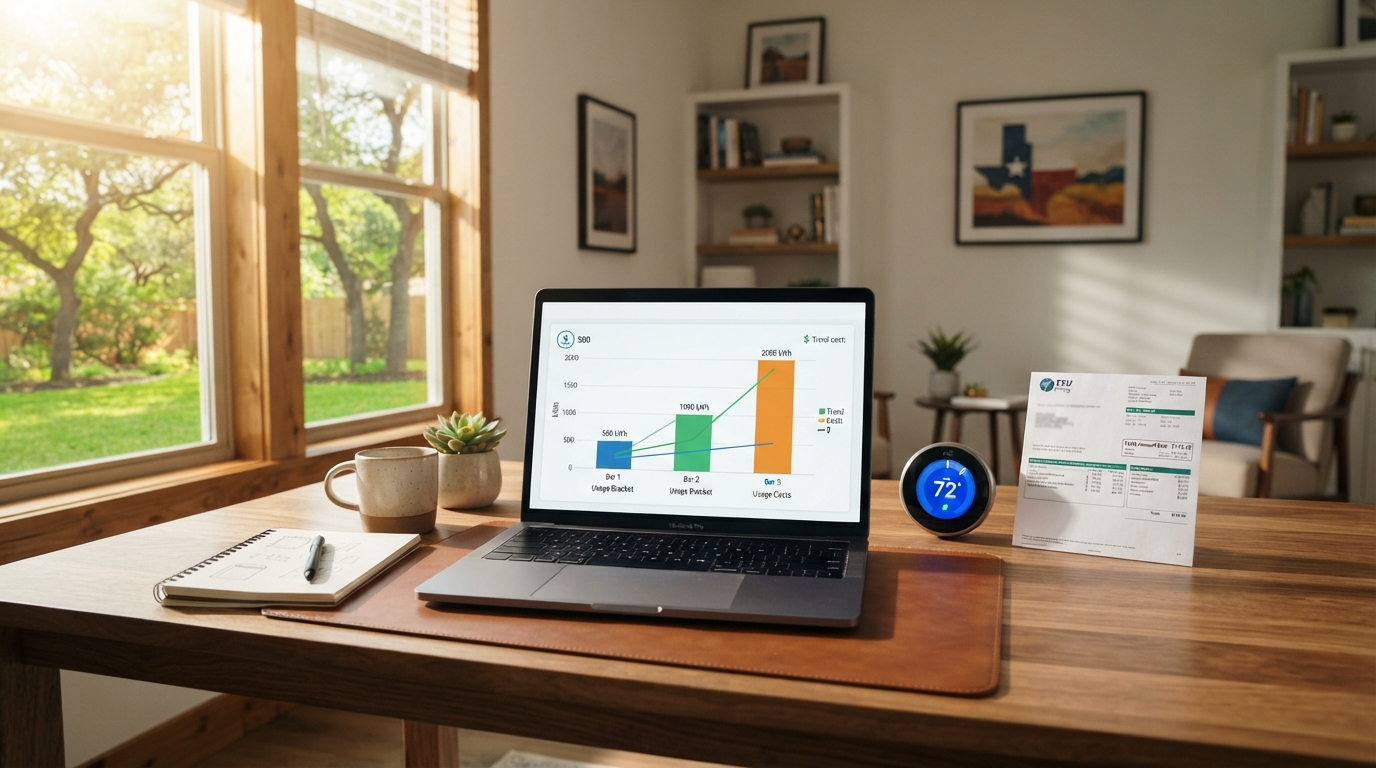
Imagine two neighbors living side by side in identical homes, using the exact same electricity provider, yet opening up their monthly power bills to find vastly different averages per kWh. How does this happen? The secret doesn’t lie in hidden magic, but rather in how Texas electricity plans are structured around your monthly usage tiers. Whether you are powering a cozy apartment or keeping a sprawling family home cool during a scorching Texas summer, understanding how your home‘s monthly consumption fits into standard usage brackets is the key to mastering your utility costs.
Demystifying the Texas Electricity Usage Scale
When shopping for a new energy plan in the Lone Star State, retail electricity providers design their pricing structures around three standard consumption benchmarks: 500 kWh, 1,000 kWh, and 2,000 kWh per month. These figures are prominently displayed on every Electricity Facts Label (EFL), serving as the foundational metrics for how average rates are calculated. Because base fees, tiered pricing credits, and delivery charges from your local Transmission and Distribution Utility (TDU) shift depending on how much power you consume, your actual monthly usage dictates whether your plan is truly cost-effective.
The 500 kWh Tier: Small Spaces and Low Usage
The 500 kWh benchmark generally reflects the energy profile of a small apartment, studio, or a home where residents are rarely during the day. Fixed charges can weigh heavily on this bracket because flat fees make up a larger percentage of the total bill. If you reside in a smaller footprint—perhaps looking for prepaid electric service to keep a tight leash on daily consumption—you need a plan that doesn’t penalize lower usage with high base fees.
The 1,000 kWh Tier: The Standard Texas Benchmark
Often considered the industry standard for average-sized residential homes, the 1,000 kWh tier is what most comparison websites use as the baseline to compare Texas electricity rates. If your household consistently hovers around this mark, shopping for plans optimized specifically for this bracket will yield the most predictable results. Whether you are setting up power for a newly purchased home or shopping for electricity Houston residents rely on, hitting this sweet spot avoids the penalties associated with under- or over-consumption.
The 2,000 kWh Tier: Large Homes and Heavy Cooling Needs
Larger homes, older insulation, electric vehicle chargers, and heavy air conditioning use during peak summer months will easily push a household into the 2,000 kWh tier. Many plans offer bill credits or volume discounts that kick in only after crossing this threshold. If your summer energy usage skyrockets—such as properties utilizing services typically designed for commercial spaces or small business electricity providers—selecting a plan tailored to high-volume usage is essential to prevent unexpected cost spikes.
Fixed-Rate vs. Variable-Rate: Structure Matters
Beyond usage tiers, you must choose between a fixed-rate and a variable-rate structure. A variable rate may change throughout a contract based on market dynamics, meaning your price per kWh can swing unpredictably depending on wholesale market conditions. By contrast, a fixed-rate plan is completely guaranteed for the entire term of the contract, shielding you from seasonal price shocks regardless of whether you live in North Texas or manage electricity Fort Worth properties.
It is important to remember that rates displayed on comparison platforms are for informational purposes, include fixed and variable local charges, are subject to change without notice, and are only final when a service agreement is completed. Furthermore, consumers navigating these options should note that BulbOne is an independent platform and is in no way associated with PowerToChoose.org (the official site operated by the PUC of Texas). BulbOne is dedicated to helping consumers explore their power to choose the best, most cost-effective, and reliable cheap electricity plans in Texas by transparently filtering options based on your unique usage profile.
Want to lock in a guaranteed fixed rate and eliminate energy market surprises? Just call 1-844-567-2863 to speak with our Texas energy experts today.
Frequently Asked Questions
Why does my average price per kWh change if my usage changes?
Energy plans feature tiered pricing structures and fixed base fees on their Electricity Facts Labels. If your usage falls outside the targeted 500, 1,000, or 2,000 kWh blocks, the impact of fixed charges shifts, altering your overall average cost per kWh.
Is a fixed-rate plan truly locked for my entire contract?
Yes. A fixed-rate contract guarantees your energy charge component for the full duration of your term, though TDU delivery fees may still fluctuate based on regulatory approvals.
How do I know which usage tier matches my home?
Check your past 12 months of utility bills to find your average monthly consumption, then match that exact kilowatt-hour range when reviewing plan EFLs on independent platforms like BulbOne.