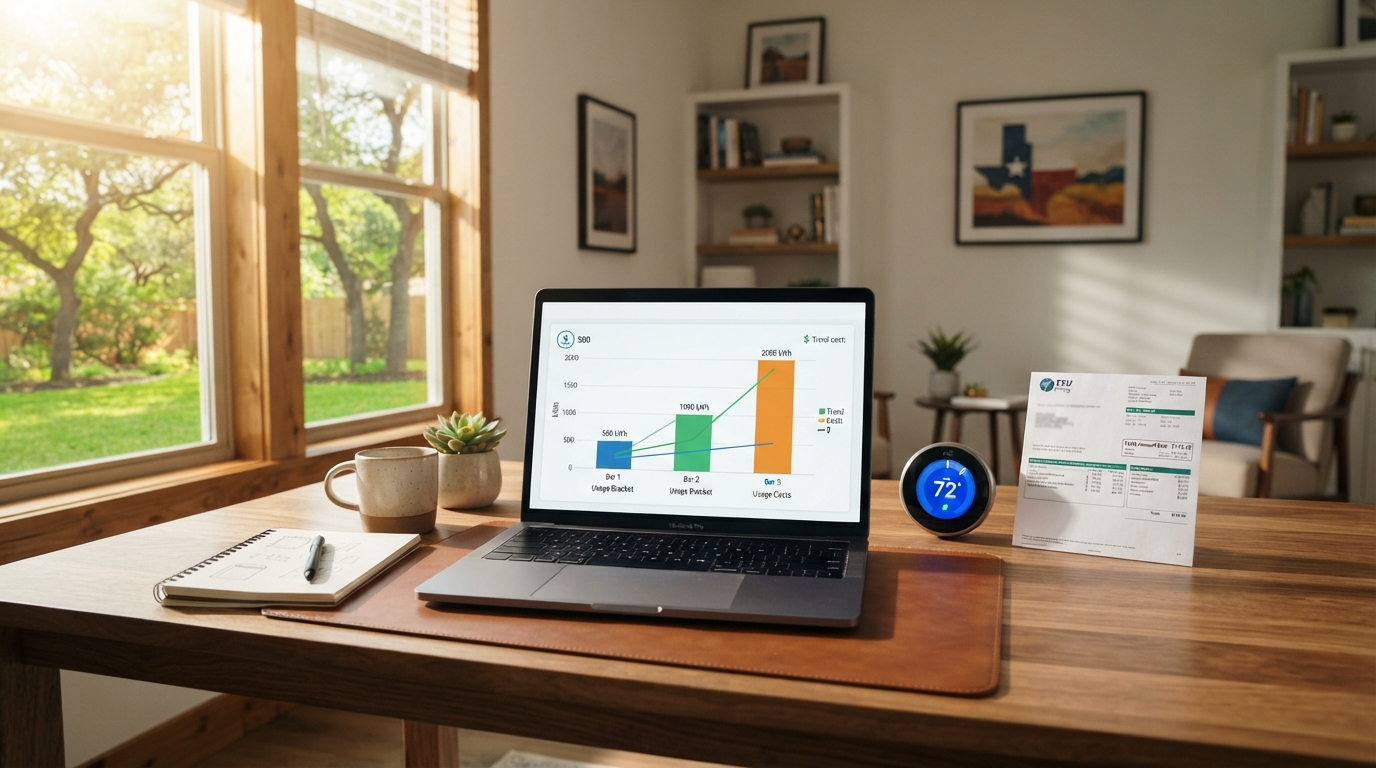
Imagine two next-door neighbors living in identical homes. They share the same square footage, keep their thermostats at the exact same temperature, and even use the same retail electric provider. Yet, when their monthly utility bills arrive, one neighbor is celebrating a surprisingly low statement while the other is staring in disbelief at an inflated average rate per kilowatt-hour. How is this possible? The culprit isn’t magic; it is a fundamental misunderstanding of usage brackets. In the Lone Star State’s deregulated market, your actual monthly consumption dictates everything. If you want to successfully compare Texas electricity rates without falling into costly billing traps, knowing your historic usage is your ultimate secret weapon.
Decoding the Texas Energy Market: Beyond the Surface
As an expert guide and independent platform, BulbOne helps consumers explore their options to find the best, most cost-effective, and reliable cheap electricity plans in Texas. It is vital to remember that BulbOne is an independent resource and is in no way associated with PowerToChoose.org, which is operated by the Public Utility Commission (PUC) of Texas and features a different, limited set of companies and plans. When you begin your search—whether you are looking at plans for electricity Houston homes, electricity Fort Worth apartments, or exploring small business electricity providers and prepaid electric service options—you will notice that average prices per kWh are typically displayed based on standard 1,000 kWh or 2,000 kWh monthly usage blocks, inclusive of fixed and variable local charges. These disclosures are strictly examples based on generalized usage patterns; your actual average prices will vary according to your actual consumption.
Demystifying the 500, 1,000, and 2,000 kWh Scale
To master your power to choose journey, you must understand how retail electric providers structure their pricing tiers. Most plans advertise average rates tied to three distinct consumption thresholds:
- The 500 kWh Tier: Typically representing small apartments or very conservative energy users. Rates here often carry higher base fees because the fixed transmission and distribution utility (TDU) charges are distributed across fewer kilowatt-hours.
- The 1,000 kWh Tier: The traditional baseline benchmark used across the industry to represent an average Texas household. Many consumers assume this matches their home, leading to surprises if they actually use significantly more or less.
- The 2,000 kWh Tier: Tailored for larger homes, high-consumption properties, or scorching summer months when air conditioning units run constantly. Some plans offer deeply discounted rates specifically at this high tier, which can penalize moderate users.
Understanding Fixed vs. Variable Rates
As you evaluate different structures, keep in mind that electricity service offers can be fixed or variable. A variable rate may change throughout a contract term based on market conditions, while a fixed-rate is guaranteed for the term of your agreement. All platform rates are gathered directly from official Electricity Facts Labels (EFLs) for comparison purposes and are always subject to change.
How BulbOne Transforms Your Plan Selection
Without looking at your past utility bills, picking an energy plan is essentially guessing. BulbOne helps users filter options transparently based on their unique usage profile, matching your actual historic data against complex EFL pricing tiers so you never pay for a mismatch. Ready to cut through the confusion and take control of your energy costs? Just call 1-844-567-2863 to speak with our Texas comparison experts today.
Frequently Asked Questions
Why does my average price per kWh change every month?
Your average price fluctuates because many Texas energy plans feature tiered pricing structures or bill credits tied to specific monthly consumption brackets. If your actual usage shifts from month to month, you land in a different pricing tier on your EFL.
Where can I find my historic energy usage?
You can easily locate your past 12 months of consumption history by logging into your current provider’s online portal or by visiting Smart Meter Texas, the official repository for your home’s actual interval data.
Are the advertised rates on comparison sites guaranteed?
Advertised rates are examples based on standard usage tiers (like 1,000 kWh) and are subject to change until you enroll. Fixed rates lock in your energy charge for your contract term, but local TDU delivery fees can still fluctuate.