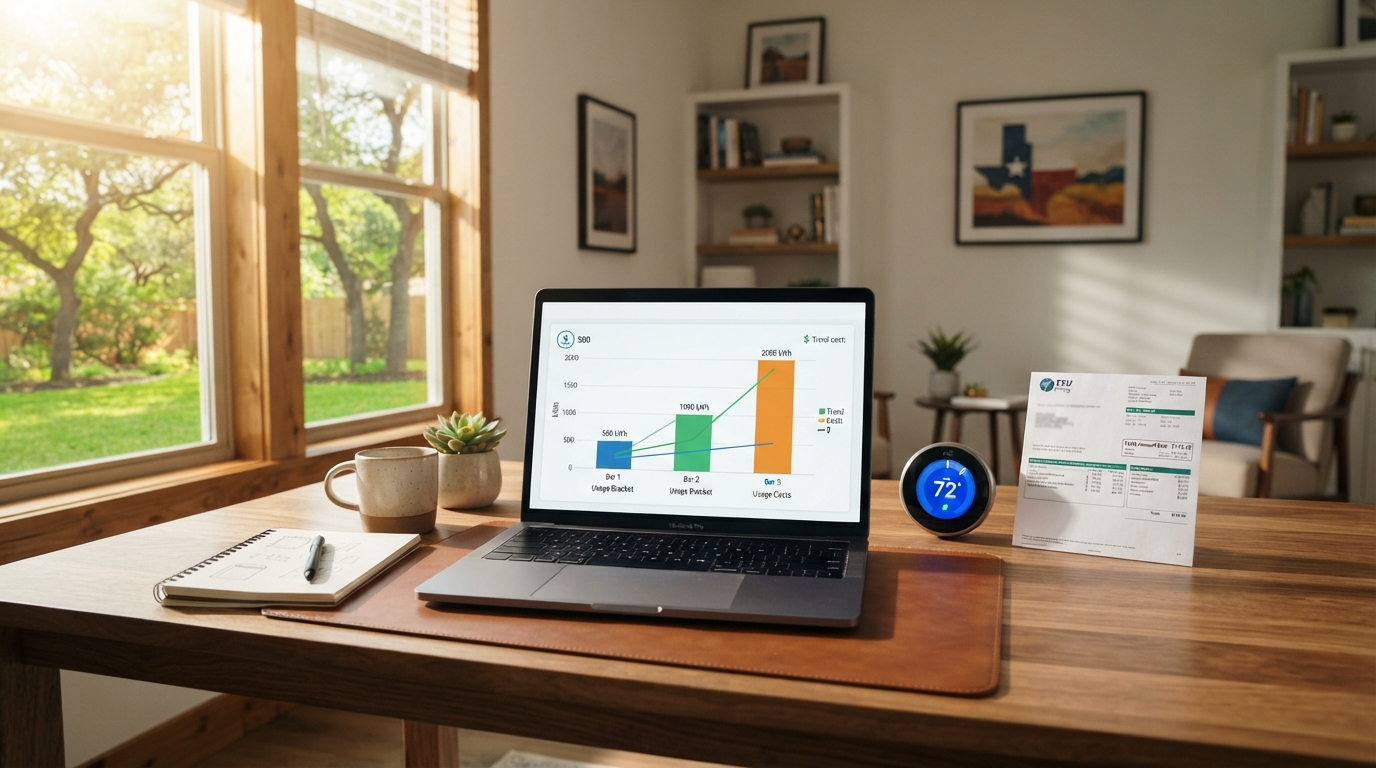
Imagine two neighbors living down the street from one another, both signed up with the exact same retail energy provider under a standard residential contract. When the monthly bills arrive, neighbor A is thrilled with a low average price per kilowatt-hour, while neighbor B is left staring in shock at an unexpectedly steep bill. How is this possible? The answer lies in how Texas electricity usage brackets work. Understanding the 500 kWh, 1,000 kWh, and 2,000 kWh tiers is the single most important step you can take to protect your wallet.
The Mechanics of Texas Electricity Usage Brackets
When you shop for a new energy plan, comparison websites display advertised average prices based on standard monthly consumption blocks: 500 kWh, 1,000 kWh, and 2,000 kWh. These standard blocks help consumers benchmark prices, but they can also create a false sense of security. Because many retail providers implement complex pricing formulas—such as base fees, tiered energy charges, and bill credits that activate only within specific windows—your actual average price per electric service unit fluctuates dramatically based on how much power you consume.
As an independent consumer resource, BulbOne helps Texans navigate this maze. We believe in complete transparency, noting that our platform is an independent resource and is in no way associated with PowerToChoose.org, which is operated by the PUC of Texas. Whether you are looking for residential options or comparing small business electricity providers, knowing your precise consumption habits is vital.
Deconstructing the 500 kWh, 1,000 kWh, and 2,000 kWh Tiers
Each usage bracket tells a distinct financial story:
- The 500 kWh Tier: Typically representing a small apartment or a vacant home, this bracket often carries higher base fees relative to the low volume of energy consumed, inflating the per-kWh cost.
- The 1,000 kWh Tier: Traditionally used as the standard benchmark for average Texas homes, this is where many plans show their most competitive pricing metrics.
- The 2,000 kWh Tier: Built for larger homes or peak summer cooling loads. Some plans offer massive discounts at this level, while others heavily penalize you with usage-trigger spikes if you fall short.
It is worth noting that electricity service offers can be fixed or variable, and these rates are gathered directly from each provider’s Electricity Facts Label (EFL) for comparison purposes only. Whether you need traditional billing or are exploring options like prepaid electric service, the EFL remains your ultimate rulebook.
How to Find Your True Consumption Profile
Before you compare Texas electricity rates, you need to review your historic utility data. Pull up your past 12 months of bills to see your seasonal highs and lows. If your summer usage spikes into the heavy cooling brackets while your winter usage plummets, picking a plan optimized strictly for the 1,000 kWh benchmark could backfire.
Consumers across the Lone Star State use these brackets to tailor their searches. For instance, homeowners managing heavy HVAC loads in electricity Houston markets face very different climate-driven peaks compared to those tracking loads in electricity Fort Worth neighborhoods. Aligning your historical average with the right EFL bracket prevents nasty billing surprises.
Conclusion and Expert Guidance
Navigating Texas’s deregulated market doesn’t have to be a guessing game. By understanding how tiered rate structures and usage brackets impact your monthly statements, you take back control of your utility budget. BulbOne empowers you to filter options transparently based on your unique usage profile, helping you find a plan that matches your reality rather than a marketing illusion.
Confused about which usage bracket fits your home? Just call 1-844-567-2863 to speak with our Texas energy experts for personalized guidance.
Frequently Asked Questions
Why does my average price per kWh change on my bill compared to what was advertised?
Advertised prices are calculated strictly at exact consumption benchmarks (500, 1,000, or 2,000 kWh). If your actual usage falls outside these exact blocks, fixed base fees and tiered variable adjustments will alter your true average price per kWh.
Where can I find the official rules and pricing details for a specific energy plan?
You can find all legal pricing metrics, base fees, and tier thresholds directly inside the provider’s Electricity Facts Label (EFL), which is legally required to be published for every plan.
Is BulbOne affiliated with the official state power comparison website?
No, BulbOne is an independent consumer education and comparison platform and is not associated with PowerToChoose.org, which is operated by the Public Utility Commission of Texas.