Imagine two next-door neighbors living in identical homes, using the exact same electricity provider, yet opening monthly bills that look drastically different. One neighbor is thrilled with a low average price per kilowatt-hour (kWh), while the other is baffled by a surprisingly steep bill. How does this happen? The secret doesn’t lie in the provider itself, but in how their consumption aligns with the plan’s pricing structure. In the deregulated Texas energy market, understanding your personal consumption habits is the ultimate key to unlocking real savings.
Demystifying the Usage Scale: 500, 1,000, and 2,000 kWh Brackets
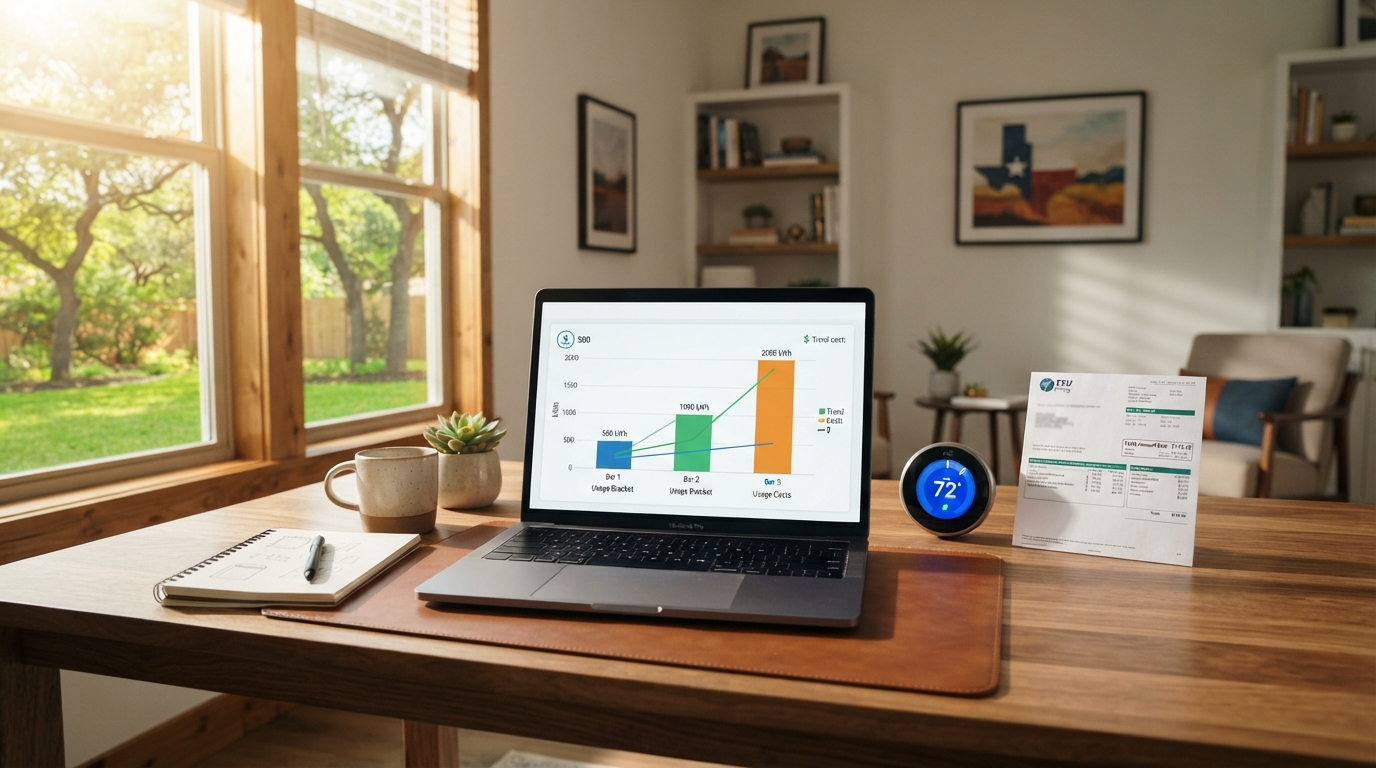
When you compare Texas electricity rates, you will notice that average prices per kWh are typically displayed based on standard 1,000 kWh or 2,000 kWh monthly usage blocks, inclusive of fixed and variable local charges. These disclosures are strictly examples based on average usage patterns, and your actual average prices will vary according to your actual consumption. To choose wisely, you must understand the three primary tiers found on every Electricity Facts Label (EFL):
- The 500 kWh Tier: Generally targeted toward smaller apartments, studio spaces, or unoccupied properties during mild months.
- The 1,000 kWh Tier: The traditional baseline benchmark used widely across the industry to showcase median residential consumption.
- The 2,000 kWh Tier: Designed to reflect larger homes, heavy summer air conditioning loads, or multi-person households.
Why Your Historic Usage Matters Most
If you shop blindly without knowing whether you typically consume 800 kWh or 2,200 kWh a month, you risk choosing a plan optimized for a bracket you never actually hit. Many plans feature bill credits or pricing penalties tied directly to these tiers. Knowing your historic usage transforms you from a casual browser into an empowered consumer who can accurately evaluate cheap electricity plans in Texas without falling for misleading headline rates.
As an expert guide and independent platform, BulbOne helps users explore their power to choose the best, most cost-effective options on the market. It is important to note that our platform is an independent resource and is in no way associated with PowerToChoose.org, which is operated by the PUC of Texas and features a different, limited set of companies and plans. Whether you are searching for homes in electricity Houston districts, expanding your enterprise with trusted small business electricity providers, navigating options for electricity Fort Worth, or even exploring prepaid electric service, we bring you cleaner pricing transparency.
Electricity service offers can be fixed or variable. A variable rate may change throughout a contract while a fixed-rate is guaranteed for the term. All platform rates are gathered from EFLs for comparison purposes and are subject to change.
Ready to cut through the confusion and take control of your energy costs? Just call 1-844-567-2863 to speak with our Texas comparison experts today.
Frequently Asked Questions
What is an Electricity Facts Label (EFL)?
An EFL is a standardized document mandated in Texas that outlines the exact pricing, fee structures, and contract terms for a specific energy plan, detailing how rates fluctuate across different usage tiers.
Why do advertised rates differ from my actual monthly bill?
Advertised rates are calculated based on exact usage blocks like 1,000 or 2,000 kWh. If your actual consumption falls outside those exact brackets, your average price per kWh will adjust accordingly based on the plan’s specific pricing formula.
Are all Texas electricity comparison websites the same?
No. Independent platforms like BulbOne offer distinct navigation tools, filter options, and data transparency that differ from state-run registries like PowerToChoose.org.