Imagine two neighbors living down the street from one another, both signed up with the exact same retail electric provider. Yet, when the monthly utility statements arrive, one neighbor is thrilled with a low average price per kilowatt-hour (kWh), while the other is staring down a shockingly high bill. How does this happen? The secret lies in how Texas energy plans use tiered rate structures, base fees, and usage brackets. At BulbOne, as an expert guide and independent platform, we help consumers explore their power to choose the best, most cost-effective, and reliable cheap electricity plans in Texas without falling victim to hidden pricing traps.
Understanding the Texas Electricity Usage Brackets
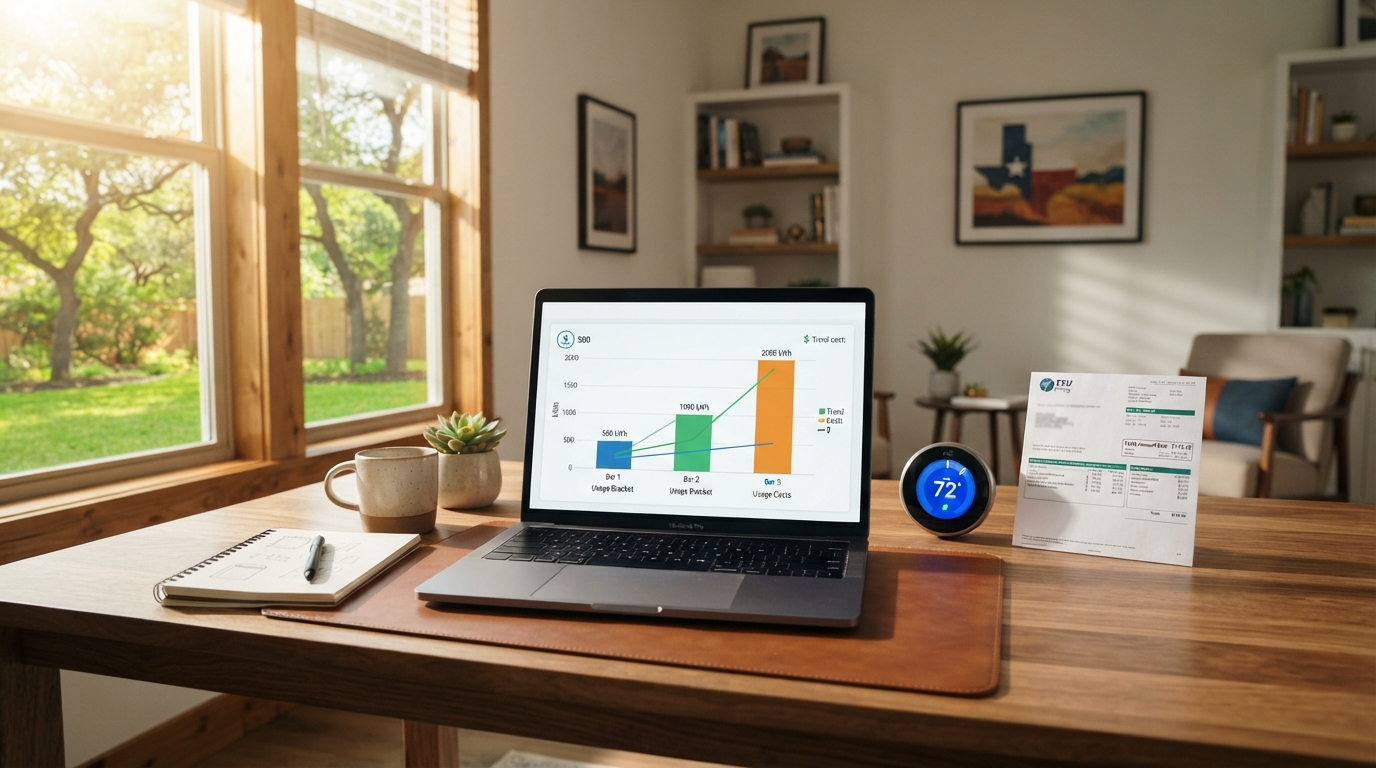
When you browse online to compare Texas electricity rates, you will notice that every advertised price point is calculated based on three standard monthly usage blocks: 500 kWh, 1,000 kWh, and 2,000 kWh. These brackets are designed to represent different types of residences, from tiny apartments to sprawling family homes. However, understanding how these tiers affect your final bill requires looking past the bold headline numbers.
It is important to understand that average prices per kWh displayed on comparison platforms are examples based on standard 1,000 kWh or 2,000 kWh monthly usage blocks. These examples include fixed and variable local charges, but the actual average price for electric service varies based on exact electricity usage patterns.
How Tiered Rates Manipulate the Average Price Per kWh
Providers often structure their pricing plans with specific thresholds in mind. For instance, a plan might feature a heavy base charge or a bill credit that only kicks in if you consume precisely over a certain number of kilowatt-hours. If your usage happens to fall outside that sweet spot—especially if you drop too low or spike too high—the math changes instantly. A plan that looks exceptionally cheap at the 2,000 kWh tier can suddenly become wildly expensive if your household only consumes 800 kWh in a milder month.
Whether you are shopping for a home or exploring options for small business electricity providers, knowing your consumption habits is crucial. This tiered reality also applies across different regions, whether you are managing a property requiring electricity Houston style or looking for alternatives like prepaid electric service to keep a tighter grip on monthly spending.
Reading the Fine Print: EFLs and Independent Tools
To truly decode these rate structures, you must consult the Electricity Facts Label (EFL) associated with every plan. Electricity service offers can be fixed or variable, and that rates are gathered directly from each provider’s Electricity Facts Label (EFL) for comparison purposes only. EFL documents lay out the exact mathematical formulas, base fees, and per-kWh charges for the 500, 1,000, and 2,000 kWh tiers.
While many Texans rely on state-run portals like the official power to choose website, BulbOne operates as an independent resource and is in no way associated with PowerToChoose.org (which is operated by the PUC of Texas). Our goal is to bring total clarity to the market, helping you filter options based on your unique usage profile rather than generic estimates.
Whether you need reliable energy for a home in electricity Fort Worth properties or elsewhere in the Lone Star State, matching your actual historic usage to the correct bracket ensures you never get trapped by a misleading rate structure again.
Confused about which usage bracket fits your home? Just call 1-844-567-2863 to speak with our Texas energy experts for personalized guidance.
Frequently Asked Questions
Why does the average price per kWh change when my usage changes?
Plans often include fixed monthly base fees and tiered billing structures. When your total monthly kWh consumption goes down, fixed fees are distributed over fewer kilowatt-hours, driving the average cost per kWh up. Conversely, using more power can spread out those base fees or trigger specific usage credits.
Are the prices shown on comparison sites guaranteed?
No. The prices displayed on comparison platforms are standardized examples tied strictly to 500, 1,000, or 2,000 kWh usage blocks. Your actual average price per kWh will depend entirely on your home’s exact energy consumption during that billing cycle.
Where can I find the official pricing rules for a specific plan?
Every retail electric provider in Texas is legally required to provide an Electricity Facts Label (EFL) for their plans. The EFL contains the precise math, tiered breakdowns, fees, and contract terms directly from the provider.