
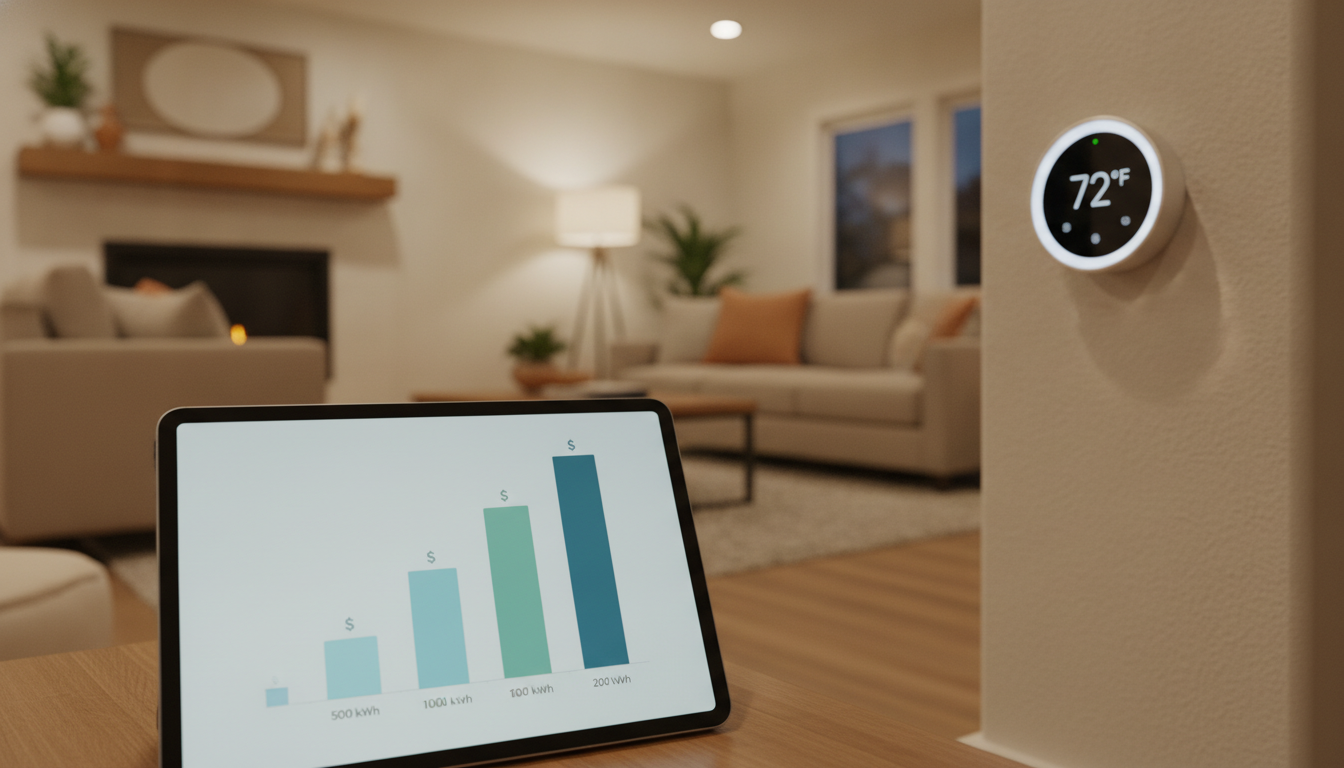
Imagine two next-door neighbors in Houston. They live in identical houses, use the same retail electric provider, and signed up for the exact same energy plan. Yet, when their monthly bills arrive, one neighbor pays a significantly higher average rate per kilowatt-hour (kWh) than the other. How is this possible? The answer lies in the complex, often misunderstood world of Texas electricity usage brackets and tiered rate structures.
In the deregulated Texas energy market, retail electric providers design plans with different pricing tiers. When you shop for power, you will notice that plans are categorized into three standard usage brackets: 500 kWh (typically for small apartments), 1,000 kWh (for medium-sized homes or townhomes), and 2,000 kWh (for larger single-family homes). However, the price you actually pay is rarely a flat rate. Instead, it fluctuates dynamically based on how much power you consume during a billing cycle. Understanding this tiered structure is the key to avoiding bill shock and finding the most cost-effective plan for your household.
Demystifying the 500, 1,000, and 2,000 kWh Scale
To help consumers compare plans, the Public Utility Commission of Texas requires providers to disclose estimated average prices at three specific usage points: 500 kWh, 1,000 kWh, and 2,000 kWh. These benchmarks are published on a standardized document called the Electricity Facts Label (EFL).
It is crucial to realize that the average prices per kWh displayed on comparison platforms are examples based on standard 1,000 kWh or 2,000 kWh monthly usage blocks. These examples include fixed and variable local charges, but the actual average price for electric service varies based on exact electricity usage patterns. If your home consumes 850 kWh or 1,200 kWh, your final average rate will not match the neat estimates on the EFL. Instead, your rate is calculated using a blend of volumetric charges, base fees, and local utility delivery fees.
Why the Average Price per kWh Changes Drastically
The primary reason your average rate shifts is the presence of fixed charges and tiered rate pricing. A tiered rate structure means the price per kWh changes once your consumption crosses certain thresholds. There are two main ways providers structure these tiers:
1. The Impact of Fixed Base Fees and TDU Charges
Most electricity plans include a flat monthly base fee from the provider, along with fixed and variable Transmission and Distribution Utility (TDU) charges. TDU charges are set by regulated utilities (like CenterPoint or Oncor) and cover the cost of maintaining the power lines. When you use very little electricity—say, 500 kWh—any flat monthly base fee is distributed over fewer kilowatt-hours, driving your average price per kWh upward. Conversely, as your usage increases toward 2,000 kWh, that same flat fee is diluted across more units of energy, causing the average rate per kWh to drop.
2. Minimum Usage Fees and Bill Credits
Some plans are designed with “bill credits” that only trigger once you reach a specific usage threshold, such as exactly 1,000 kWh. If you consume 999 kWh, you miss out on the credit, and your average rate skyrockets. Other plans penalize low usage by charging a minimum usage fee if you consume less than a set amount. This is why a plan that looks incredibly cheap at the 1,000 kWh mark can become highly expensive if your actual usage falls slightly short.
How to Use This Knowledge to Shop Smarter
Before you sign a contract, you must understand your home’s historical usage. Looking at your past utility bills will tell you your minimum, maximum, and average seasonal consumption. Armed with this data, you can visit BulbOne to compare Texas electricity rates with a clear understanding of which usage bracket your home actually falls into.
Please keep in mind that electricity service offers can be fixed or variable, and that rates are gathered directly from each provider’s Electricity Facts Label (EFL) for comparison purposes only. Reading the EFL carefully is the only way to see exactly how a provider calculates its rates across different brackets.
BulbOne: Your Independent Guide to the Texas Power Grid
Navigating the nuances of tiered rates, TDU charges, and EFL disclosures can be overwhelming. That is where BulbOne comes in. As an expert guide and independent platform, BulbOne helps consumers explore their power to choose the best, most cost-effective, and reliable cheap electricity plans in Texas. We believe in complete transparency, which is why we help you filter plans based on your actual monthly usage rather than relying on generic benchmarks.
We also want to clarify that our platform is an independent resource and is in no way associated with PowerToChoose.org (which is operated by the PUC of Texas). Our goal is simply to give you the tools, analysis, and clarity you need to make an informed decision for your home.
Confused about which usage bracket fits your home? Just call 1-844-567-2863 to speak with our Texas energy experts for personalized guidance.
Frequently Asked Questions
What is an Electricity Facts Label (EFL)?
An EFL is a standardized document required in Texas that details a plan’s pricing structure, contract length, termination fees, and average rates at the 500, 1,000, and 2,000 kWh usage levels. It is the most important tool for understanding how your rate is calculated.
Why does my bill show a different average rate than the plan advertised?
Advertised rates are calculated using exact usage blocks (like 1,000 kWh). If your actual consumption is higher or lower, fixed charges, tiered pricing, or missing bill credits will cause your actual average rate per kWh to differ from the advertised benchmark.
Are TDU charges included in the advertised EFL rates?
Yes, the average rates displayed on the EFL include both the retail provider’s charges and the standard TDU delivery charges. However, TDU charges can change throughout the year with regulatory approval, which can slightly impact your overall rate.