
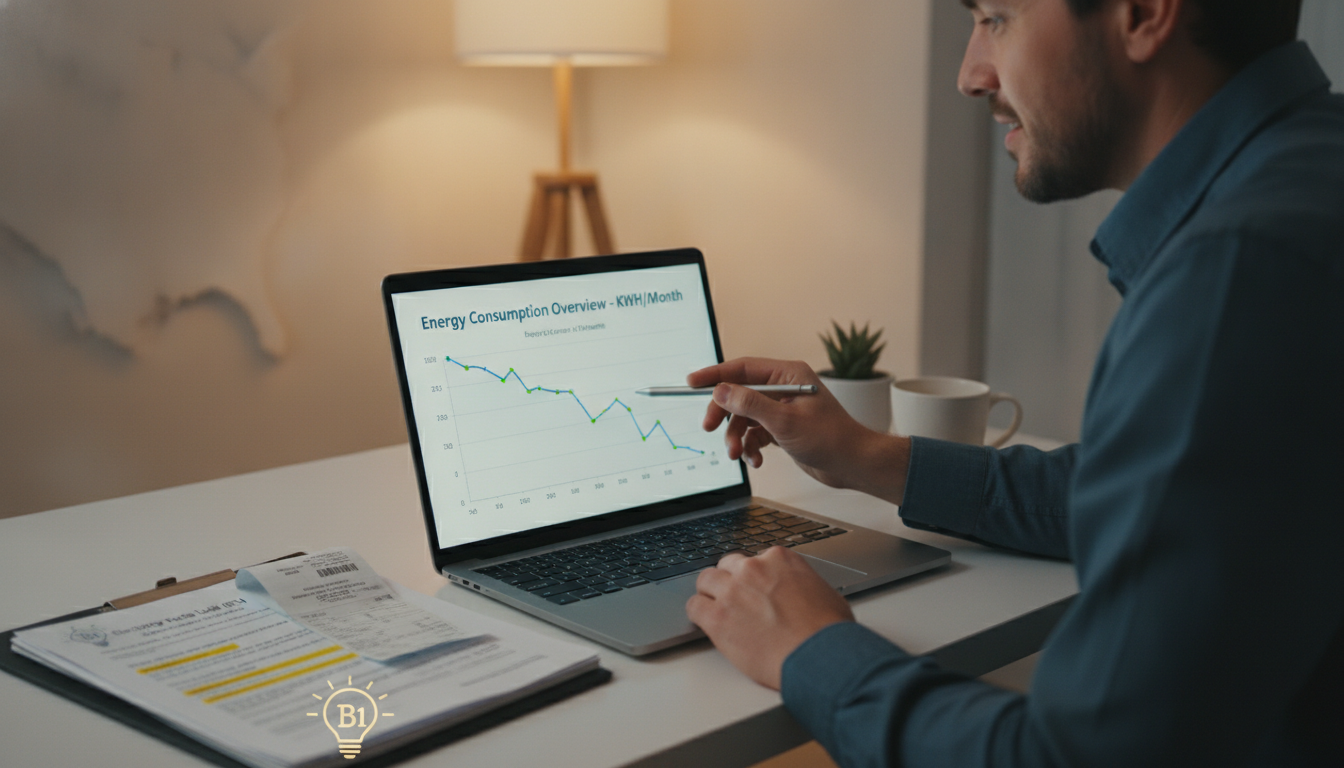
In the vast, deregulated energy market of Texas, the sheer volume of plans can be overwhelming. While the concept of “Power to Choose” offers incredible freedom, truly harnessing it to find the best, most cost-effective, and reliable cheap electricity plans requires more than just a quick glance at advertised rates. The ultimate secret weapon for accurate plan comparison isn’t a magic formula or a hidden trick; it’s simply knowing your historic energy usage.
The Illusion of Average Rates: Why Your Usage Matters Most
Many Texans navigate the energy market by looking for the lowest advertised price per kilowatt-hour (kWh). These average prices are typically displayed based on standard usage blocks – most commonly 1,000 kWh or 2,000 kWh monthly usage. While these disclosures provide a baseline, they are examples based on average usage patterns. Here’s the critical truth: your actual average price per kWh will vary according to your actual consumption.
Imagine two households. One consistently uses 800 kWh per month, while another averages 1,800 kWh. A plan that looks incredibly attractive at the 1,000 kWh usage mark might have hidden fees or tiered pricing that make it significantly more expensive for the 800 kWh household, or perhaps less competitive for the 1,800 kWh user. Without knowing your specific usage patterns, you’re essentially comparing apples to oranges, making it nearly impossible to predict your actual monthly bill accurately.
Unlocking Your Usage Data: The First Step to True Savings
So, how do you get this crucial historic usage data? It’s more accessible than you might think:
- Your Current Provider: Most retail electricity providers (REPs) offer online portals where you can view and download your past 12-24 months of usage data.
- Your TDU (Transmission and Distribution Utility): Companies like Oncor, CenterPoint Energy, AEP Texas, and Texas-New Mexico Power (TNMP) are responsible for delivering electricity to your home. They often have online portals where you can access your smart meter data, providing detailed usage by month, day, or even hour.
- Past Bills: Simply gather your electricity bills from the past 12 months. They typically list your monthly kWh consumption.
Aim for at least 12 months of data to account for seasonal variations (think scorching Texas summers and unexpected winter freezes). This comprehensive view will reveal your true energy footprint.
Decoding the Electricity Facts Label (EFL) with Your Data
Once you have your historic usage, the Electricity Facts Label (EFL) becomes your best friend. The EFL is a standardized document that provides a clear, concise summary of an electricity plan’s terms and conditions. It’s where you’ll find the details that truly impact your bill, beyond the headline rate.
Here’s how your usage data empowers you when reviewing an EFL:
- Minimum Usage Fees: Many plans, especially those with very low advertised rates, include minimum usage fees. If your consumption drops below a certain threshold (e.g., 800 kWh), you might incur an additional charge. If your historic data shows you frequently fall below this, that “cheap” plan could become surprisingly expensive.
- Tiered Pricing: Some plans have different rates for different usage blocks (e.g., one rate for 0-1000 kWh, a different rate for 1001-2000 kWh). By cross-referencing these tiers with your actual usage, you can calculate a far more accurate average price for *your* home.
- Bill Credits: Conversely, some plans offer bill credits when you reach specific usage levels. Your historic data will help you determine if you consistently hit these targets, making the credit a real benefit rather than a theoretical perk.
- Fixed vs. Variable Rates: The EFL will explicitly state if the electricity service offer is fixed or variable. A variable rate may change throughout a contract, potentially fluctuating with market conditions. A fixed-rate, on the other hand, is guaranteed for the term of your contract, offering stability. Knowing your usage helps you assess the potential impact of rate changes if you opt for a variable plan, or appreciate the certainty of a fixed rate. All platform rates, including those on BulbOne, are gathered from EFLs for comparison purposes and are subject to change, especially variable rates.
BulbOne: Your Independent Navigator in the Texas Market
At BulbOne, we understand that navigating the Texas energy market can feel like a labyrinth. That’s why we’ve positioned ourselves as an expert guide and an independent platform, helping consumers explore their power to choose the best, most cost-effective, and reliable cheap electricity plans in Texas. We empower you by providing the tools and insights to use your historic energy usage effectively.
It’s important to clarify that BulbOne is an independent resource and is in no way associated with PowerToChoose.org. PowerToChoose.org is operated by the PUC of Texas and features a different, limited set of companies and plans. Our platform is designed to give you cleaner pricing transparency and expert guidance, ensuring you’re comparing plans based on what truly matters to your wallet.
By inputting your actual historic usage into our tools, you move beyond the generic 1,000 kWh or 2,000 kWh examples. We help you cut through the marketing noise and apply the intricate details of each EFL to your unique consumption patterns, revealing your true projected costs.
Empowering Your Decision
Your historic energy usage isn’t just a number on an old bill; it’s the most powerful data point you possess for making an informed energy decision. It transforms the abstract concept of a “rate” into a concrete understanding of what your actual bill will be. This knowledge empowers you to avoid surprises, bypass hidden fees, and confidently select a plan that genuinely aligns with your lifestyle and budget.
Ready to cut through the confusion and take control of your energy costs? Just call 1-844-567-2863 to speak with our Texas comparison experts today.