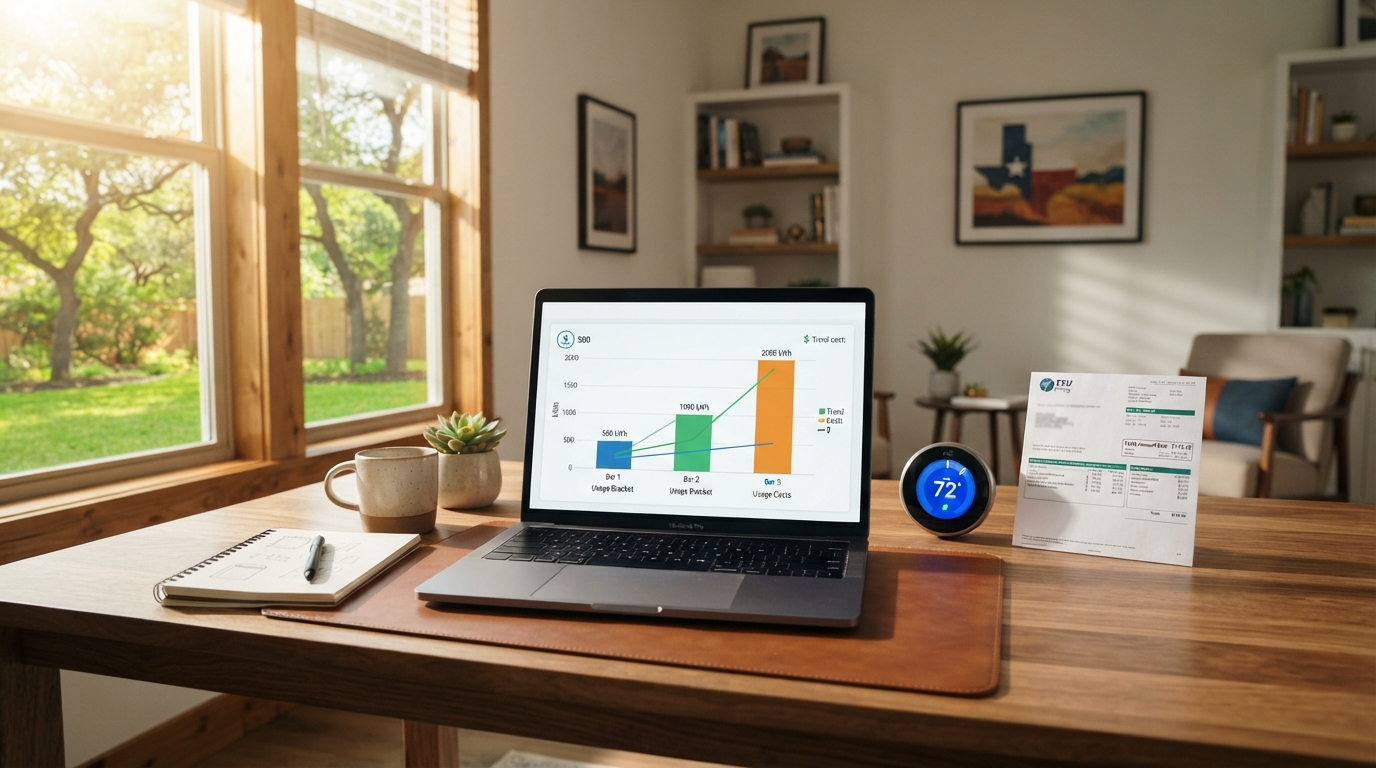
Imagine two neighbors living side-by-side in identical Texas homes, both signed up with the exact same electricity provider. Yet, when their monthly utility bills arrive, one neighbor is celebrating a low average cost per kilowatt-hour, while the other is facing a shockingly high rate. How is this possible? The secret doesn’t lie in hidden magic; it lies entirely in how their household consumption aligns with standard usage brackets. Whether you are shopping for your home or browsing small business electricity providers, understanding your historical consumption patterns is the ultimate key to avoiding costly billing surprises.
The Myth of the One-Size-Fits-All Energy Plan
When Texans first dive into the deregulated market, they often look for a single advertised rate that promises ultimate savings. However, the Texas energy market operates on specialized usage tiers. When you power to choose your next energy plan, you will quickly notice that retail electric providers structure their pricing around distinct monthly volume brackets.
As an independent resource, BulbOne is here to help consumers explore the best, most cost-effective, and reliable cheap electricity plans in Texas. We are completely independent and in no way associated with PowerToChoose.org, which is operated by the PUC of Texas and features a different, limited set of companies and plans. To find true value, you must look past the flashy headlines and examine how your home consumes power across these specific brackets.
Demystifying the 500, 1,000, and 2,000 kWh Scale
To analyze plans effectively, you must understand the holy grail of Texas energy disclosures: the 500, 1,000, and 2,000 kWh usage blocks. Electricity Facts Labels (EFLs) display average prices per kWh based strictly on these standard monthly consumption thresholds. These disclosures are examples based on average usage patterns, and actual average prices will vary according to your actual consumption.
The 500 kWh Bracket: Apartment and Small Space Living
If you live in a compact studio, a small apartment, or a modest townhome, your monthly usage likely hovers around the 500 kWh mark. Many plans look remarkably cheap at higher tiers but penalize low-volume users with steep base fees or tiered pricing structures that inflate your average rate.
The 1,000 kWh Bracket: The Standard Benchmark
The 1,000 kWh tier serves as the benchmark baseline used across most marketing materials for residential power in cities ranging from bustling urban centers like electricity Houston neighborhoods to the sprawling suburbs of electricity Fort Worth. While helpful for a generalized comparison, assuming your home always hits this exact number is a recipe for budget overruns.
The 2,000 kWh Bracket: Large Homes and Heavy Demands
For large single-family homes, heavy air conditioning use during scorching Texas summers, or properties utilizing alternative solutions like prepaid electric service, consumption often scales toward the 2,000 kWh bracket. Certain plans feature heavy usage credits that only kick in once you cross this threshold, making them fantastic for large estates but disastrous for smaller homes.
How BulbOne Transforms Your Plan Comparison Experience
Electricity service offers can be fixed or variable. Remember that a variable rate may change throughout a contract term, while a fixed-rate is guaranteed for the duration of your contract. All platform rates are gathered directly from official EFLs for comparison purposes and are subject to change.
Because every household is unique, looking at generic averages won’t cut it. BulbOne empowers you to compare Texas electricity rates by filtering options transparently based on your actual historic usage profile rather than blind guesses.
Ready to cut through the confusion and take control of your energy costs? Just call 1-844-567-2863 to speak with our Texas comparison experts today.
Frequently Asked Questions
Why does my average price per kWh change every month?
Your average price fluctuates because many Texas energy plans feature tiered pricing or usage credits tied to specific monthly consumption blocks, such as 500, 1,000, or 2,000 kWh. If your actual usage shifts from month to month, your position within these brackets changes, altering your final average rate.
Are the prices listed on EFLs guaranteed to be what I pay?
The rates listed on an Electricity Facts Label are calculated examples based strictly on the exact consumption benchmarks of 500, 1,000, and 2,000 kWh. Your actual monthly bill will vary depending on your real-time, exact consumption, plus any local TDU delivery fees and recurring monthly charges.
What is the difference between fixed-rate and variable-rate plans?
A fixed-rate plan locks in your energy charge per kWh for the entire term of your contract, protecting you from market spikes. A variable-rate plan fluctuates month-to-month based on market conditions, meaning your rate can increase or decrease without prior warning.