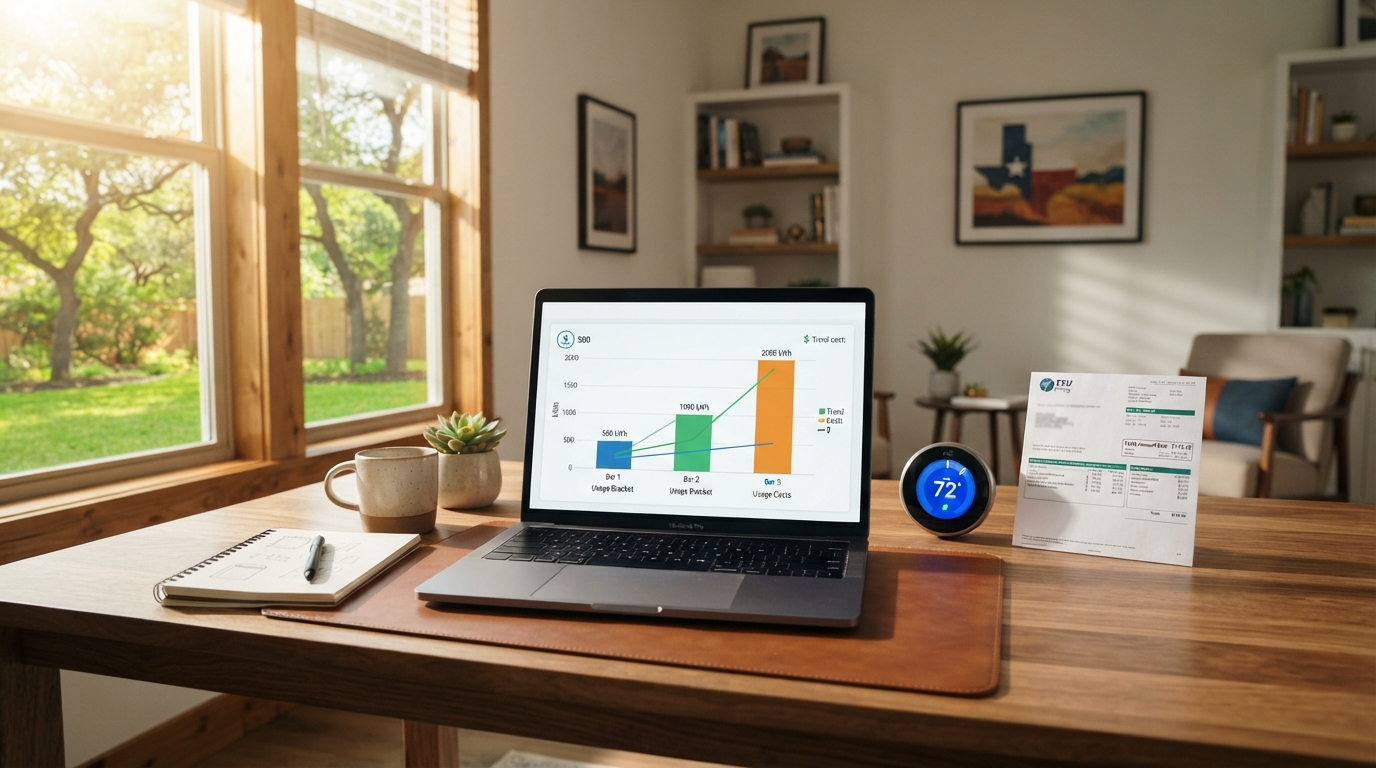
Every Texan loves the thrill of hunting down a bargain, especially when it comes to keeping the air conditioning running during those scorching summer months. But if you have ever opened your monthly power bill only to find a shocking jump in charges despite using roughly the same amount of energy, you are not alone. The secret to finding truly cheap electricity plans in Texas isn’t just about picking the lowest advertised price on a banner ad; it is about understanding how your household usage aligns with the fine print.
As your trusted, independent expert guide, BulbOne helps consumers explore their power to choose the best, most cost-effective, and reliable cheap electricity plans in Texas. We want to ensure that your search for low-cost energy is backed by smart shopping strategies that protect your wallet month after month.
The Trap of the Single Rate Number
When shopping for power—whether you are looking at options for residential properties, small business electricity providers, or exploring alternative options like prepaid electric service—it is easy to fall for the headline-grabbing price per kilowatt-hour. Retail electric providers often structure their pricing around specific consumption tiers, most notably the standard 1,000 kWh or 2,000 kWh monthly usage marks.
Why Your Usage Tier Matters
Electricity Facts Labels (EFLs) are your best friend when shopping for energy in deregulated markets. These documents break down how much you will actually pay depending on whether you cross a certain threshold. If a plan is advertised as incredibly cheap at exactly 2,000 kWh, but your household only consumes 900 kWh, you might trigger penalty fees or lose bill credits, skyrocketing your effective rate. Conversely, if your home uses a lot of power, a plan optimized for lower usage will penalize you with higher costs.
How to Read the Electricity Facts Label (EFL)
Before locking in any contract, you must dive into the EFL. These official documents outline all fixed and variable local charges, transmission and distribution utility (TDU) delivery fees, and energy charges. Keep in mind that rates displayed on comparison platforms are for informational purposes, subject to change, and only finalized when a service agreement is executed with the chosen retail electric provider.
Matching Your Lifestyle to the Right Plan
Whether you need power for a home in electricity Houston neighborhoods or a suburban property that requires robust electricity Fort Worth plans, your historical usage is your guide. Pull up your past 12 months of utility statements. Calculate your average monthly consumption. If you consistently hover around the 1,000 kWh mark, select a plan optimized specifically for that tier to prevent surprise bills.
Navigating the deregulated market can sometimes feel overwhelming, especially when traditional resources like the state’s official power to choose portal leave you sorting through hundreds of confusing options. BulbOne simplifies this entire comparison process so consumers can effortlessly find cost-effective options tailored directly to their actual lifestyle and habits.
Ready to slash your monthly energy costs with a reliable, cheap electricity plan? Just call 1-844-567-2863 to speak with our experts today.
Frequently Asked Questions
Does a lower advertised rate always mean a cheaper monthly bill?
Not necessarily. Advertised rates are often calculated at exact usage tiers (like 1,000 kWh or 2,000 kWh). If your actual usage falls outside those specific sweet spots, your effective rate can change drastically due to base fees or lost bill credits.
Is BulbOne affiliated with the state’s official energy website?
No. BulbOne is completely independent and in no way associated with PowerToChoose.org, which is operated by the Public Utility Commission (PUC) of Texas.
Where can I find my historical monthly usage?
You can view your past 12 months of energy consumption by logging into your current provider’s online portal or by checking your previous monthly billing statements.