
When you flip a light switch in the Lone Star State, electricity flows seamlessly into your home. However, the path that power takes to reach your outlets is entirely dictated by where you live. Whether you are looking at options for electricity Houston style or managing a commercial space that relies on trusted small business electricity providers, understanding how your region functions is crucial. As an independent platform, BulbOne helps consumers explore their power to choose the best, most cost-effective, and reliable cheap electricity plans in Texas, navigating the complexities of regional utility zones with ease.
What is a TDSP and Why Does It Matter?
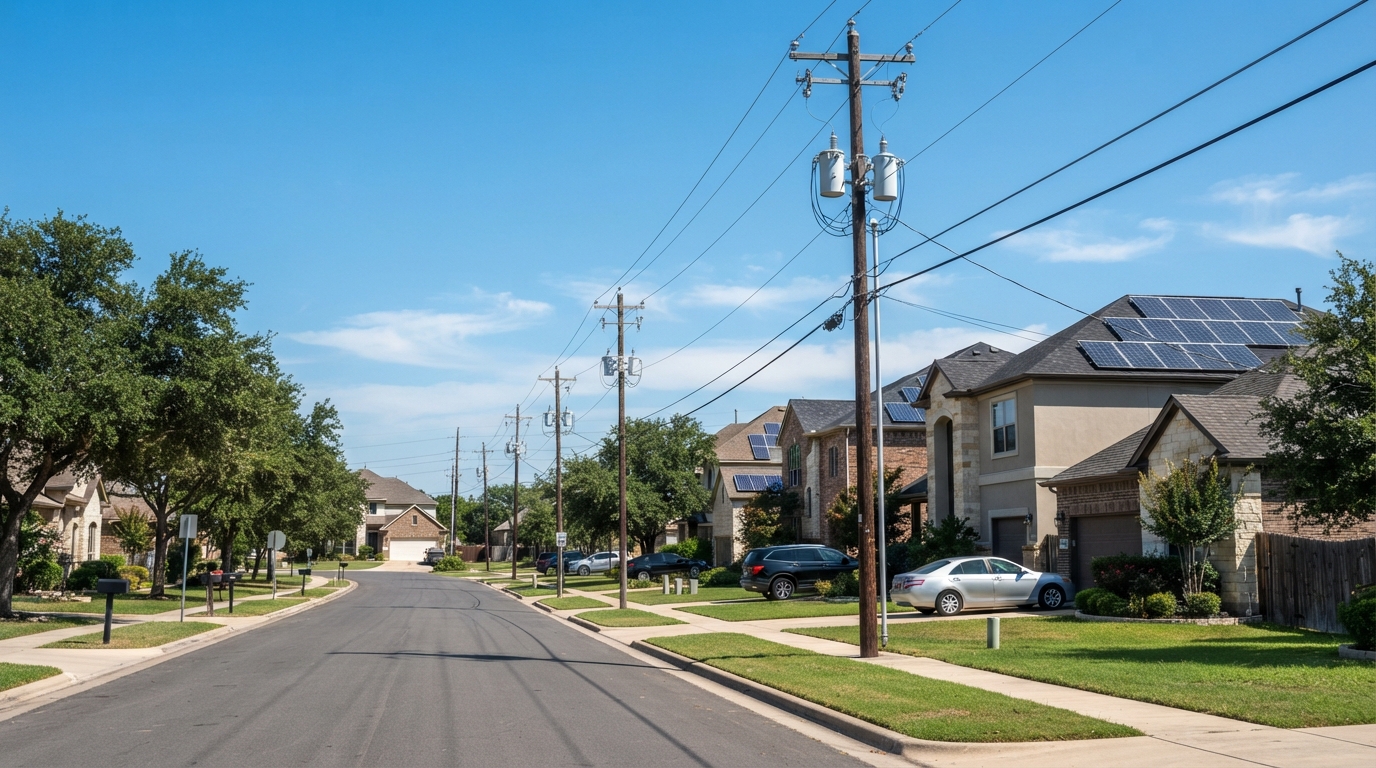
To truly understand your energy bill, you have to separate your Retail Electric Provider (REP) from your Transmission and Distribution Service Provider, commonly known as a TDSP or utility company. While your REP is the company you pay on your monthly bill and choose from a competitive market, your TDSP is the regulated entity that physically maintains the poles, wires, and meters in your specific geographic territory. If your lights go out due to a storm, it is your local TDSP—not your REP—that rolls trucks out to restore power.
The Major Texas Utility Territories
Texas is divided into distinct utility service areas, each managed by a different TDSP. Some of the most prominent ones include Oncor, CenterPoint Energy, AEP Texas, and Texas-New Mexico Power (TNMP). Because these companies operate in different regions—ranging from North Texas and the Gulf Coast to West Texas and parts of the Rio Grande Valley—their infrastructure costs and operational challenges vary significantly. These differences directly impact the local delivery fees baked into your overall energy costs.
How Local Delivery Fees Impact Your Average Price
When you shop for a plan, you will notice that average prices per kWh are typically based on standard 1,000 kWh or 2,000 kWh monthly usage blocks. These advertised rates include a mix of the REP’s energy charge and the TDSP‘s fixed and variable local delivery charges. Because every utility zone has a unique set of approved transmission fees, pricing is always based on each specific area’s utility rates. Furthermore, not all cities in Texas have electric choice; municipally owned utilities and electric cooperatives often keep their generation and delivery bundled under a single local entity.
For consumers seeking alternative setups, such as those exploring prepaid electric service, knowing your local TDSP ensures compatibility with smart meter technologies required for real-time usage tracking. It is also worth noting that electricity service offers can be fixed or variable, and rates are gathered directly from each provider’s Electricity Facts Label (EFL) for comparison purposes only. Rates are subject to change and only finalized when an agreement is completed.
Navigating Your Regional Energy Options
Whether you need a residential plan near electricity Fort Worth sectors or are simply trying to make sense of your regional utility zone, having a clear guide makes all the difference. While state-level portals like the official power to choose website offer a broad directory, independent resources provide tailored guidance to help you compare Texas electricity rates efficiently. Ultimately, understanding your TDSP zone empowers you to make smarter, more budget-friendly energy choices.
Want to check the most competitive rates available in your specific Texas zip code? Just call 1-844-567-2863 to speak with our local energy experts today.
Frequently Asked Questions
What is the difference between an REP and a TDSP?
An REP (Retail Electric Provider) is the company you buy your electricity from and pay each month. A TDSP (Transmission and Distribution Service Provider) is the local utility company that owns and maintains the physical poles, wires, and meters delivering the power to your home.
Can I choose which TDSP delivers my electricity?
No. TDSPs are regulated monopolies assigned to specific geographic regions. You cannot switch your TDSP, but in deregulated areas of Texas, you can choose which REP supplies the electricity that travels over those lines.
Are delivery fees included in my advertised electricity rate?
Yes. The standard price per kWh shown on an Electricity Facts Label (EFL) bundles both the energy generation charges from your REP and the mandatory pass-through delivery charges mandated by your local TDSP.


