
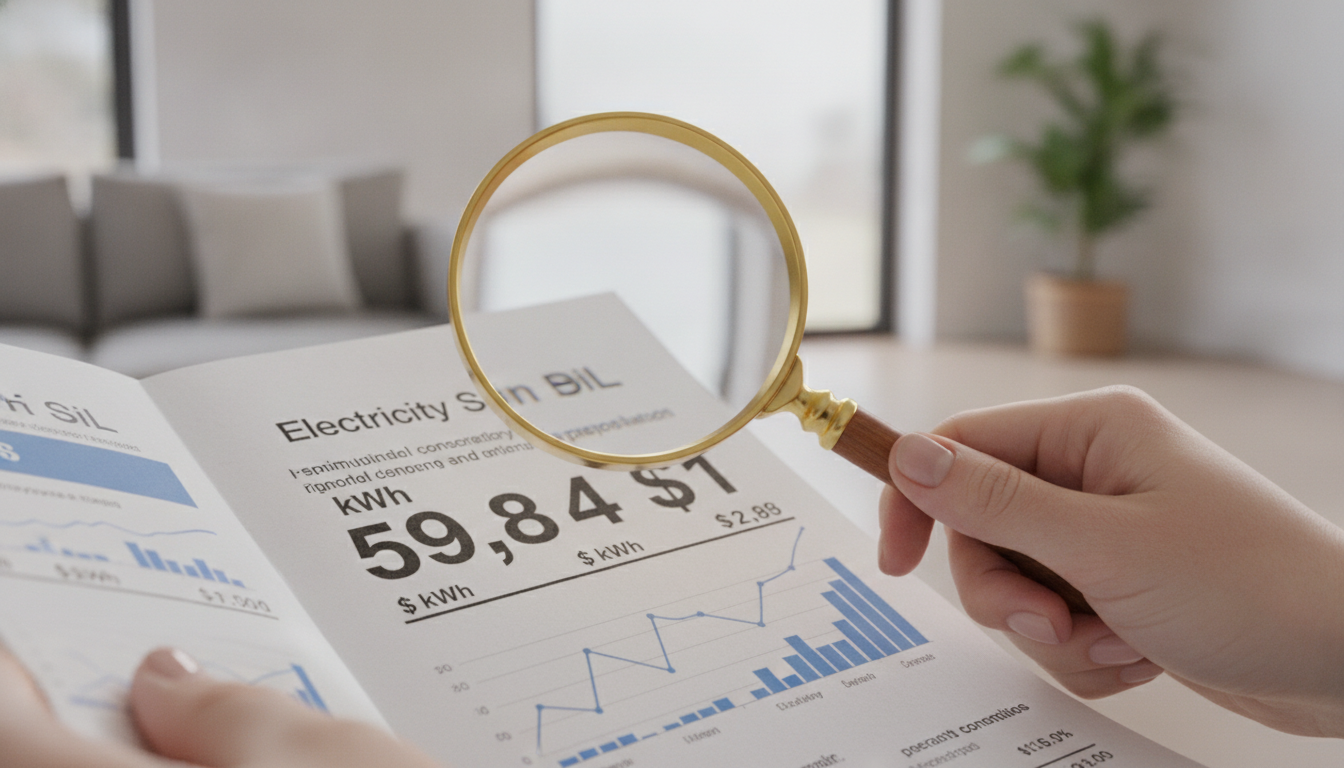
Many Texans embark on the quest for ‘cheap electricity,’ only to find themselves baffled by unexpected charges and higher-than-anticipated bills. The truth is, the secret to genuinely low-cost energy isn’t just about finding the lowest advertised rate; it’s about understanding how that rate applies to your specific household’s energy consumption. Without this crucial insight, what appears to be a bargain can quickly become a budget buster.
The Illusion of “Cheap”: Why Advertised Rates Can Be Misleading
It’s a common scenario: you see an incredibly attractive rate advertised, perhaps a headline number that seems too good to be true. You sign up, eager for savings, only to receive a bill that leaves you scratching your head. This disconnect often stems from a misunderstanding of how electricity plans are structured and, more importantly, how your actual usage patterns interact with those structures. Many plans come with intricate details – such as bill credits, tiered rates, or minimum usage fees – that significantly alter the effective price per kilowatt-hour (kWh) depending on how much electricity you consume.
To truly decode the offers and find a plan that genuinely aligns with your budget, you need to look beyond the flashy numbers and delve into the details, primarily found on the Electricity Facts Label (EFL).
Your Usage is the Key: 1,000 kWh vs. 2,000 kWh
The single most critical factor in determining your actual electricity cost in Texas is your monthly usage. Most retail electric providers (REPs) structure their plans and advertise their rates based on specific usage thresholds, commonly 1,000 kWh or 2,000 kWh. The average price per kWh displayed on an EFL is a calculation based on a specific amount of electricity used, and it includes all fixed and variable local charges, transmission and distribution fees, and the energy charge itself for that particular usage level.
Here’s where the illusion can creep in: a plan might appear incredibly competitive at 1,000 kWh due to a significant bill credit applied at precisely that usage level. However, if your household consistently uses, for example, 1,500 kWh or 2,500 kWh, you might miss out on that credit entirely, or the per-kWh price for usage beyond the threshold could be substantially higher. Conversely, a plan designed for high usage might seem expensive at 500 kWh but becomes highly cost-effective at 2,000 kWh. Your final monthly costs will always depend on your actual usage, making it paramount to match a plan to your consumption habits rather than just chasing the lowest headline rate.
Decoding the Electricity Facts Label (EFL) for Real Savings
The Electricity Facts Label (EFL) is your most powerful tool in the hunt for cheap and competitive electricity. It’s a standardized document that every REP must provide, detailing the terms of service, pricing structure, and key information about the plan. Here’s what to focus on:
- Average Price Per kWh: The EFL will clearly list the average price per kWh at common usage levels, typically 500 kWh, 1,000 kWh, and 2,000 kWh. This is crucial. Instead of just looking at the single lowest number, compare these three figures to your own historical usage.
- Base Charges and Bill Credits: Pay close attention to any fixed monthly charges (base charges) or bill credits. Many plans offer a bill credit (e.g., $50 off) if your usage falls within a specific range (e.g., between 1,000 kWh and 2,000 kWh). If your usage is outside that range, you won’t receive the credit, and your effective per-kWh rate will be much higher.
- Energy Charge: This is the core price for the electricity itself. However, remember that other charges (like TDU delivery charges, which are passed through to you) are added on top to reach the total average price per kWh.
To use the EFL effectively, you first need to understand your own consumption. Review your past electricity bills for the last 12 months to get a clear picture of your average monthly usage and identify any seasonal spikes. Once you know your typical usage, you can compare it directly to the rates presented on the EFLs of various plans, ensuring you’re choosing a plan that’s truly cheap for your home.
BulbOne: Your Independent Partner in Finding the Right Fit
Navigating the complex world of Texas electricity plans and deciphering every EFL can feel overwhelming. That’s where BulbOne steps in. We are an expert guide and independent platform dedicated to helping consumers explore their power to choose the best, most cost-effective, and reliable cheap electricity plans in Texas. We empower you to easily compare Texas electricity rates by simplifying the process of analyzing usage patterns against various plan structures.
At BulbOne, we believe in transparency and education. We help you understand how different plans perform at 1,000 kWh, 2,000 kWh, and other usage levels, ensuring you avoid hidden fees and surprise bills. It’s important to clarify that BulbOne is completely independent and in no way associated with PowerToChoose.org, which is operated by the Public Utility Commission of Texas. Our sole mission is to provide unbiased information and tools to help you make the smartest energy choices.
A quick note on rates: While BulbOne provides comprehensive information for comparison, please remember that electricity rates displayed on any comparison platform are for informational purposes only and are subject to change. Your chosen rate is only finalized when a service agreement is executed directly with your selected retail electric provider.
Understanding your electricity usage is the ultimate power move in finding truly cheap and competitive electricity plans in Texas. By taking the time to analyze your consumption patterns and cross-referencing them with the detailed information on the Electricity Facts Label, you can confidently select a plan that offers genuine savings and budget protection.
Ready to slash your monthly energy costs with a reliable, cheap electricity plan? Just call 1-844-567-2863 to speak with our experts today.
Frequently Asked Questions About Cheap Texas Electricity
Why do “cheap” electricity plans sometimes lead to high bills?
Often, plans advertised as “cheap” have specific conditions, like bill credits applied only at certain usage levels (e.g., exactly 1,000 kWh). If your usage falls outside that narrow window, you might not receive the credit, leading to a much higher effective price per kWh and a surprisingly large bill.
How can I find my typical monthly electricity usage?
The best way is to review your past 12 months of electricity bills. Most bills will clearly state your monthly kWh consumption. This will give you a reliable average and help you identify any seasonal variations in your usage.
Are the rates on comparison websites guaranteed?
Rates displayed on comparison platforms like BulbOne are for informational purposes and are subject to change by the retail electric providers. The specific rate you secure is finalized only when you execute a service agreement directly with the chosen provider, so always confirm the terms before signing up.