
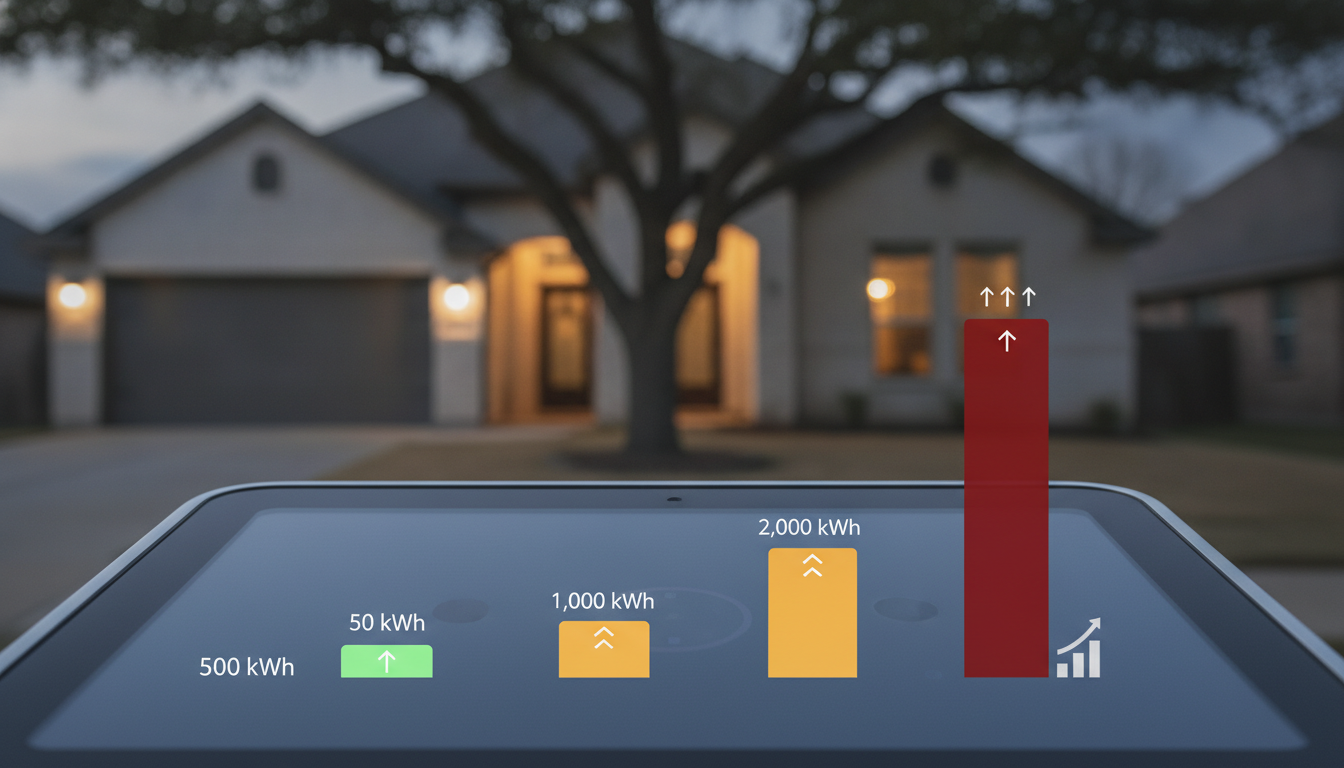
Imagine two neighbors living in similar homes, both powered by the exact same electricity provider. One month, Neighbor A pays an average of X cents per kWh, while Neighbor B, despite using slightly more or less power, sees their average cost per kWh rise to Y cents. How can this be? The secret lies in understanding Texas’s unique electricity usage brackets and the often-misunderstood tiered rate structures that define many energy plans.
The 500, 1,000, and 2,000 kWh Benchmarks: More Than Just Numbers
When you browse comparison platforms for electricity plans in Texas, you’ll invariably see average prices displayed for 500 kWh, 1,000 kWh, and 2,000 kWh of monthly usage. These aren’t arbitrary figures; they are standard benchmarks designed to give consumers a snapshot of what they might pay. However, it’s crucial to understand that these average prices per kWh are examples based on these specific usage blocks. They are calculated to include not only the energy charge but also various fixed and variable local charges, such as transmission and distribution utility (TDU) fees, that are part of your total electricity bill.
What many consumers don’t realize is that these benchmarks are just that – examples. Your actual average price for electric service will vary based on your exact electricity usage patterns. If your consumption deviates significantly from these standard blocks, the average rate you ultimately pay could look very different from the advertised examples.
Unmasking Tiered Rate Structures: The Hidden Cost of “Cheap” Electricity
Many electricity plans in Texas, particularly those with seemingly attractive low rates, employ a tiered rate structure or incorporate bill credits tied to specific usage levels. This is where the difference between Neighbor A and Neighbor B often emerges. A tiered rate plan might offer a certain rate for the first few hundred kWh, a different rate for the next block of usage, and yet another for consumption above that. For example, a plan might offer a lower rate up to 1,000 kWh, but then a much higher rate if you exceed that threshold, or vice versa.
Understanding these tiers is paramount. If a plan is advertised with a fantastic average rate at precisely 1,000 kWh, it’s highly likely that this rate includes a significant bill credit or a specific tier price that only kicks in at or around that exact usage. If you use 900 kWh, you might miss the credit entirely, dramatically increasing your average price per kWh. Conversely, if you use 1,100 kWh, you might exceed the beneficial tier, pushing a portion of your usage into a higher-cost bracket, again impacting your overall average. This dynamic means that a plan that looks incredibly cheap at 1,000 kWh could become surprisingly expensive if your actual usage is 800 kWh or 1,200 kWh.
It’s also important to remember that electricity service offers can be fixed or variable. Fixed-rate plans lock in your energy charge for the contract term, while variable rates can fluctuate monthly. Regardless of the type, rates and all associated terms are gathered directly from each provider’s Electricity Facts Label (EFL) for comparison purposes only. Always consult the EFL to understand the complete breakdown of charges, tiers, and any bill credits.
Your Power to Choose: Navigating the Texas Energy Market with BulbOne
The Texas deregulated energy market offers immense freedom and the power to choose, but with that comes the responsibility to understand the nuances of electricity plans. As an expert guide and independent platform, BulbOne helps consumers explore their power to choose the best, most cost-effective, and reliable cheap electricity plans in Texas. We are an independent resource and are in no way associated with PowerToChoose.org, which is operated by the PUC of Texas.
To truly find the perfect plan, you need to compare Texas electricity rates with your actual usage in mind, not just the advertised benchmarks. BulbOne empowers you to do this by allowing you to filter options based on your unique usage profile. Instead of guessing, you can input your typical monthly kWh consumption, and our platform will help you identify plans where your usage aligns favorably with the rate structure, ensuring you don’t fall into the trap of a misleading average rate.
Don’t let the complexities of tiered rates and usage brackets catch you off guard. With the right information and tools, you can confidently select an electricity plan that genuinely fits your home’s needs and budget.
Confused about which usage bracket fits your home? Just call 1-844-567-2863 to speak with our Texas energy experts for personalized guidance.
Frequently Asked Questions
What do 500, 1,000, and 2,000 kWh mean on comparison sites?
These are standard monthly electricity usage benchmarks used to display example average prices per kWh for various plans. They help consumers compare plans, but your actual average rate will depend on your specific usage.
How does a tiered rate plan affect my average price per kWh?
In a tiered plan, different rates apply to different blocks of electricity usage. If your usage falls outside the beneficial tiers or misses a specific usage threshold for a bill credit, your overall average price per kWh can be significantly higher than the advertised example.
Where can I find the exact details of an electricity plan’s rates and fees?
All exact rates, fees, bill credits, and terms for an electricity plan are detailed in its Electricity Facts Label (EFL). It’s crucial to review the EFL before enrolling in any plan to understand the full cost structure.