Imagine two neighbors living down the street from one another, both signed up with the exact same retail electric provider. When their monthly utility bills arrive, one neighbor is thrilled with a low average cost per kilowatt-hour, while the other is staring at a bill that feels punishingly expensive. How does this happen? The secret lies in understanding how Texas electricity usage brackets work. Whether you are managing a home in electricity Houston neighborhoods or searching for options in electricity Fort Worth, your average price per kWh changes drastically depending on how much power you actually consume.
Demystifying the 500, 1,000, and 2,000 kWh Scale
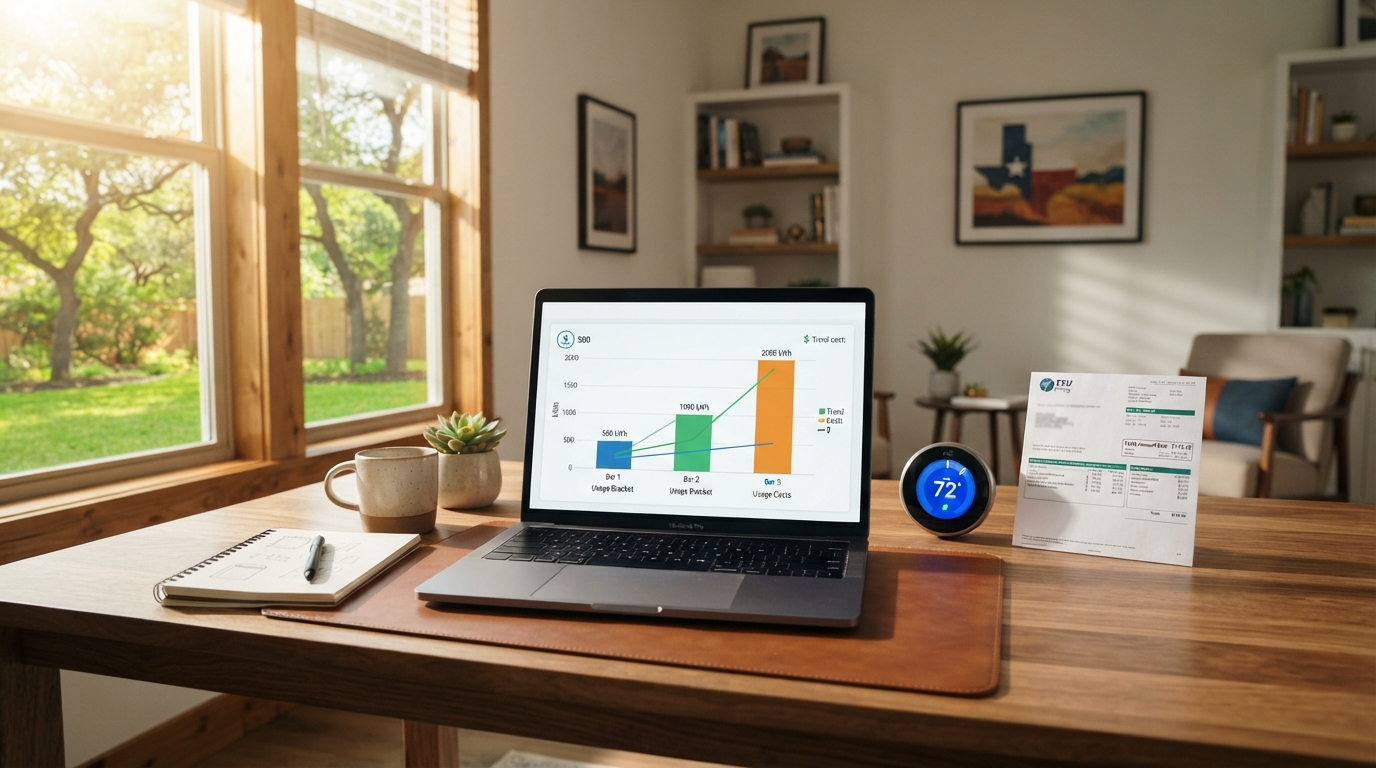
When shopping for a plan, consumers often look at comparison charts displaying a single headline price. However, that advertised rate is rarely a flat fee. Instead, the Texas deregulated market uses a tiered rate structure built around three standard benchmarks: 500 kWh, 1,000 kWh, and 2,000 kWh per month. These brackets help consumers understand how fixed base fees, variable transmission charges from local wires companies, and volumetric energy charges interact.
As an expert guide and independent platform, BulbOne helps consumers explore their power to choose the best, most cost-effective, and reliable cheap electricity plans in Texas. We want you to understand that the average prices per kWh displayed on comparison platforms are examples based on standard 1,000 kWh or 2,000 kWh monthly usage blocks. These examples include fixed and variable local charges, but the actual average price for electric service varies based on exact electricity usage patterns.
Why the Average Price Shifts Drastically
Many plans feature tiered pricing structures or bill credits that kick in only when you hit a specific consumption threshold. For example, a plan might offer a fantastic average price if you stay right at the 2,000 kWh mark, but if you drop down to 500 kWh because you traveled for the month, those credits disappear, and your base charges remain. Conversely, some plans penalize high usage with soaring rates. This is why it is vital to compare Texas electricity rates using data that aligns with your real-world habits.
It is important to remember that electricity service offers can be fixed or variable, and that rates are gathered directly from each provider’s Electricity Facts Label (EFL) for comparison purposes only. For commercial consumers exploring options beyond residential tiers, evaluating small business electricity providers requires a similar focus on consumption profiles. Meanwhile, consumers looking for alternative billing structures often investigate prepaid electric service options to maintain tighter control over their daily usage.
Finding Transparency Beyond Traditional Tools
Navigating these complex tier structures requires clear, unbiased data. As an independent resource, we want to clarify that BulbOne is in no way associated with PowerToChoose.org, which is operated by the Public Utility Commission (PUC of Texas). While residents often rely on the state’s traditional power to choose portal, BulbOne provides additional analytical filtering to help users sort plans transparently based on their unique historical usage profiles.
By reviewing your past utility statements, you can identify whether your household consistently lands in the low, medium, or high usage bracket. Matching your shopping strategy to your actual historical bracket ensures you avoid the trap of picking a plan optimized for a different household size.
Confused about which usage bracket fits your home? Just call 1-844-567-2863 to speak with our Texas energy experts for personalized guidance.
Frequently Asked Questions
Why does the average price per kWh change on my bill?
The average price changes because most Texas electricity plans bundle fixed monthly base fees with variable energy charges. When your total kWh consumption goes up or down, that fixed base fee is distributed across fewer or more kilowatts, shifting your ultimate average price per kWh.
Where do comparison platforms get their pricing data?
All rates and tier calculations displayed on comparison platforms are gathered directly from each retail electricity provider’s official Electricity Facts Label (EFL), ensuring transparency for consumers.
Can my electricity rate change if I use too little power?
Yes. Many Texas energy plans feature usage minimums or bill credits that only apply if you cross a specific threshold, such as 1,000 kWh. Falling short of that bracket can cause your average price to increase significantly.