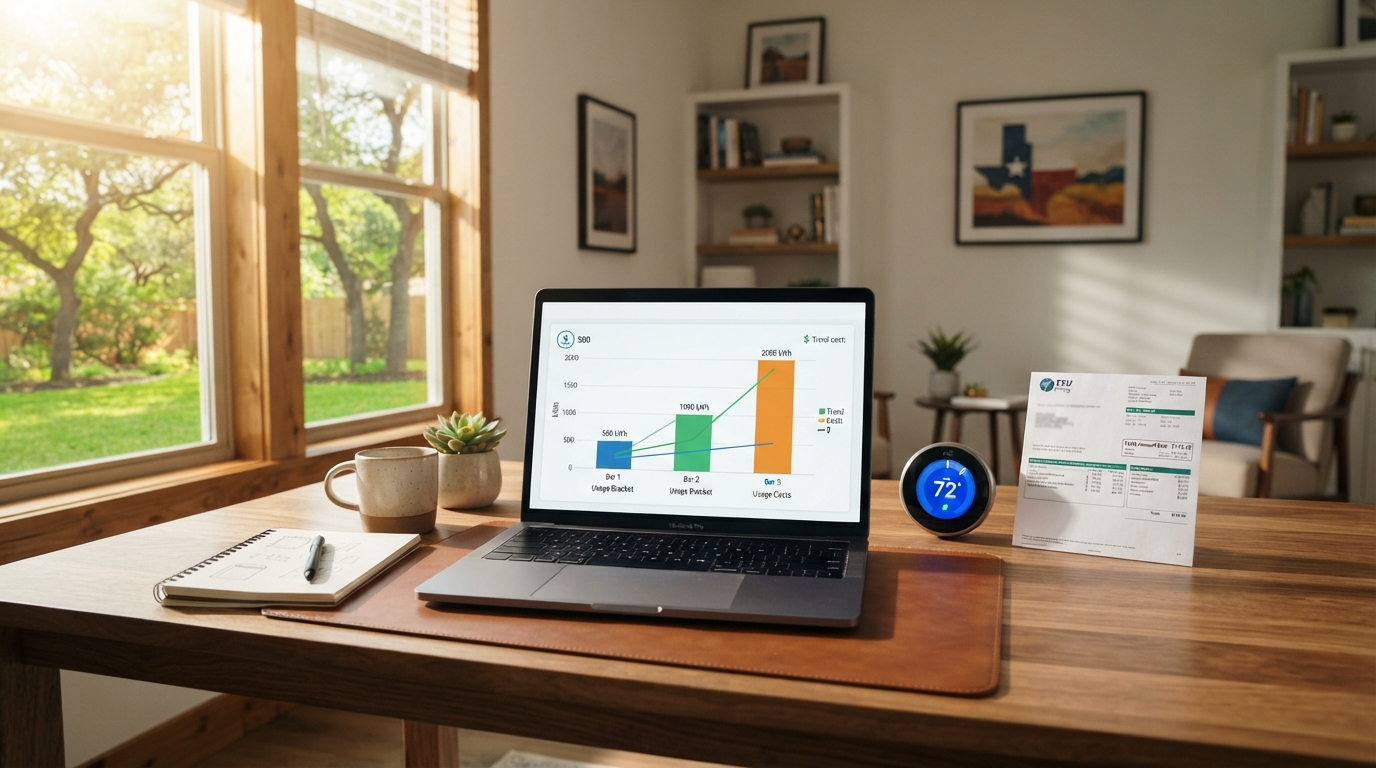
Imagine two neighbors living side-by-side in identical Texas homes, sharing the same energy provider, yet opening monthly bills that look entirely different. One neighbor is thrilled with a remarkably low average price per kilowatt-hour (kWh), while the other is baffled by a surprisingly steep invoice. How does this happen? The secret doesn’t lie in hidden magic or neighborhood luck; it comes down to how well their monthly consumption aligns with standard usage brackets. In the Lone Star State, mastering your power to choose depends entirely on understanding your household’s actual energy footprint before selecting a plan.
Demystifying the 500, 1,000, and 2,000 kWh Scale
When you start trying to compare Texas electricity rates, you will quickly notice that advertised prices per kWh are not one-size-fits-all. Instead, Texas energy companies break their pricing structures down into three standard monthly consumption blocks: 500 kWh, 1,000 kWh, and 2,000 kWh. These disclosures are examples based on average usage patterns, and actual average prices will vary according to their actual consumption. If your home consumes energy differently than these rigid benchmarks, the math on your bill can shift dramatically.
Why Your Historic Usage is Your Best Weapon
Whether you are shopping for a home in electricity Houston neighborhoods, searching for options regarding prepaid electric service, or evaluating plans for electricity Fort Worth properties—or even managing small business electricity providers—knowing your past usage is essential. Without looking at your past 12 months of utility data, you are essentially shopping blindfolded. Some plans offer incredible discounts specifically for high-volume users in the top bracket, while others reward modest consumers who stay near the lower bracket. If you pick a high-tier discount plan but only use moderate power, you might trigger penalties or lose promotional pricing.
Fixed vs. Variable Rates and Independent Guidance
As you evaluate your options, keep in mind that electricity service offers can be fixed or variable. A variable rate may change throughout a contract based on market conditions, while a fixed-rate is guaranteed for the term of your agreement. All platform rates are gathered from Electricity Facts Labels (EFLs) for comparison purposes and are subject to change.
As an expert guide and independent platform, BulbOne helps consumers explore their power to choose the best, most cost-effective, and reliable cheap electricity plans in Texas. We want to make sure you stay informed. Please note that BulbOne is an independent resource and is in no way associated with PowerToChoose.org, which is operated by the Public Utility Commission (PUC) of Texas and features a different, limited set of companies and plans. By leveraging your historic usage data alongside our transparent comparison tools, you can accurately forecast your true monthly costs without falling for bracket traps.
Ready to cut through the confusion and take control of your energy costs? Just call 1-844-567-2863 to speak with our Texas comparison experts today.
What is the importance of the 1,000 kWh usage tier?
The 1,000 kWh tier serves as a standard industry benchmark used on Electricity Facts Labels to display average price points. However, it is merely an example based on average usage patterns, and your actual average price per kWh will vary depending on your real consumption.
How does historic usage protect me from fees?
Reviewing your past utility bills reveals your true consumption bracket. Matching your habits to a plan designed for that specific bracket prevents you from accidentally triggering minimum-usage fees or missing out on tier-specific bill credits.
Is BulbOne affiliated with the official state power website?
No. BulbOne is an independent platform and resource. We are completely unaffiliated with PowerToChoose.org, allowing us to provide an objective, streamlined experience for consumers looking to compare Texas energy plans.