
Texas energy deregulation gives consumers an incredible amount of freedom, but with over a hundred retail electric providers vying for your business, having the power to choose can sometimes feel like a double-edged sword. It is easy to get lured in by a low advertised rate, but savvy shoppers know that the headline rate is only part of the story. To truly find the best plan for your household or business, you need to look beyond the surface and evaluate the hidden metrics buried in the contract terms. At BulbOne, we act as your expert guide and independent platform to help you navigate this complex landscape, ensuring you find the most cost-effective and reliable cheap electricity plans in Texas. Please note that BulbOne is an independent resource and is in no way associated with PowerToChoose.org, which is operated by the Public Utility Commission of Texas.
Why the Headline Rate is Only Half the Story
When you begin to compare Texas electricity rates, the most prominent number you see is the average price per kilowatt-hour (kWh). However, this number is not a flat rate. Selecting an electric company requires looking closely at their Electricity Facts Label (EFL). The displayed average price per kWh is merely an example based on standardized 1,000 kWh or 2,000 kWh usage models. These models include both fixed and variable local charges, but your actual rates will vary depending on your real-world usage patterns.
The Key Hidden Metrics to Evaluate in Your Contract
1. Fixed vs. Variable Rate Structures
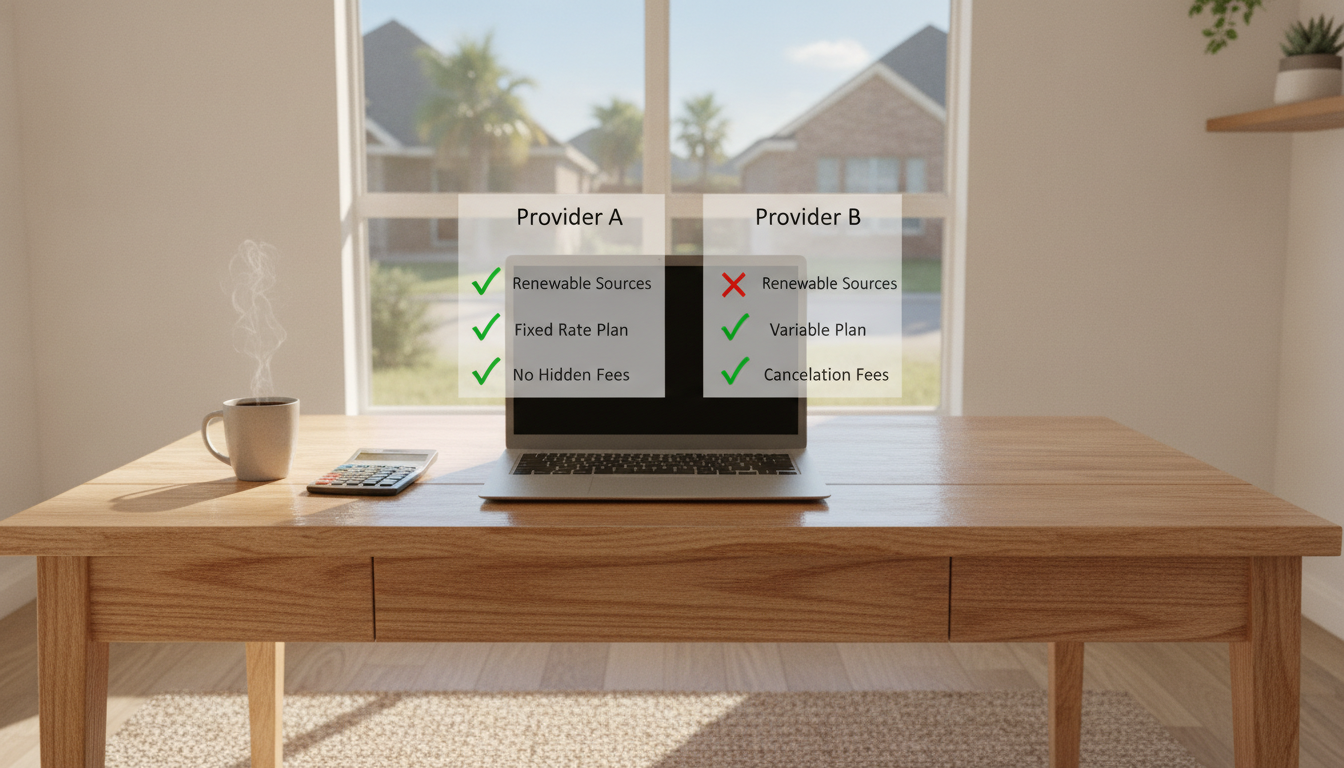
Before committing to a provider, you must understand how your rate is structured. Plans can be fixed (where the energy rate is guaranteed for the entire duration of the contract term) or variable (where the rate is subject to change based on market fluctuations). It is important to remember that all comparison rates displayed during your search are for informational purposes only until a formal service agreement is completed with your chosen provider.
2. Base Charges and Minimum Usage Fees
Many providers advertise incredibly low rates that only apply if you hit a precise usage threshold. If you fall short of or exceed that window, you may be hit with a flat base charge or a minimum usage fee that drives your average cost per kWh sky-high. For instance, residents shopping for electricity Houston or comparing plans for electricity Fort Worth might see attractive headline rates that only apply if they exceed a high usage threshold, leaving low-usage households with unexpectedly high bills.
3. Transmission and Distribution Utility (TDU) Charges
Your electricity bill consists of two main parts: the cost of the energy itself and the cost to deliver it. TDU charges are set by local utility companies (like CenterPoint or Oncor) and are passed through to the consumer. Some retail electric providers bundle these charges into their headline rate, while others list them separately. The EFL will clearly state whether these local charges are included in the advertised price or if they will be added to your bill as separate line items.
4. Contract Length and Early Termination Fees
If you need to exit your contract early, you could face steep early termination fees (ETFs). Always check the contract length and the associated penalty for leaving early. If you prefer to avoid long-term commitments and credit checks altogether, you might want to consider alternative options like a prepaid electric service, which offers greater flexibility without the burden of a long-term contract.
Aligning Your Contract with Your Energy Profile
Different types of properties require different contract structures. While residential consumers must align their plans with their household usage, commercial entities have entirely different demands. Exploring specialized options from small business electricity providers is crucial for commercial accounts to avoid residential-centric billing traps and secure terms tailored to business operational hours.
How BulbOne Simplifies the Search
At BulbOne, we believe that finding a reputable electric company should not require a degree in contract law. We simplify the vetting process by connecting users only with reputable electric companies that maintain transparent terms and reliable service. We help you look past marketing gimmicks to find stable partners with clear, honest pricing structures.
Ready to choose a trusted electric company with completely transparent terms? Just call 1-844-567-2863 to speak with our Texas energy experts.
Frequently Asked Questions
What is an Electricity Facts Label (EFL)?
The EFL is a standardized document required in Texas that details a plan’s pricing structure, contract length, early termination fees, and renewable energy percentage. It allows you to see how rates are calculated at 500, 1,000, and 2,000 kWh usage levels.
What is the difference between a fixed-rate and a variable-rate plan?
A fixed-rate plan guarantees your energy rate will remain the same for the duration of your contract term, protecting you from market spikes. A variable-rate plan can fluctuate month-to-month based on market conditions, offering flexibility but less price stability.
Are the rates displayed on comparison sites guaranteed?
No. Advertised comparison rates are for informational purposes only until a formal service agreement is completed with the provider. Actual rates will vary based on your specific monthly usage and any changes in local utility delivery charges.